
 Jazmin Bonifacio
 Posted on Jan. 20, 2026 at 10:55 am
TACLOBAN CITY — The Tacloban City Jail was initially built to hold about 100 inmates only. However, right now, it has over 500 persons deprived of liberty (PDLs) living inside its concrete walls.
Congestion defines everyday life for each Person Deprived of Liberty (PDL) inside the male dormitory. Bunk beds are too close together, and personal space is so limited that everything from food to free time must be carefully rationed. As is the case with many city jails in the country, this facility is overcrowded by almost three times its capacity.
Nonetheless, even amid bars of steel and narrow corridors, something is growing.
Along the walls of the dormitory, green lettuce and other leafy vegetables are planted in plastic pipes and recycled containers. The hydroponic gardens that have replaced the once bare gray spaces are a quiet sign of a change in a place defined by confinement.
Inside the jail, meals are regularly served; however, the portions are small, and there is not always a guarantee of fresh vegetables. Nutrition is a daily struggle for inmates. The vegetables from the hydroponic gardens do not entirely replace the regular food rations, but they do help to add freshness and variety to the otherwise limited meals.
In the gardens, the jail officials and inmates have found, in fact, a practical solution to the harsh reality. They use tight spaces and recycled materials, provide a constant supply of greens, and at the same time, give the detainees something worthwhile to do in a place where routine and restrictions are the main characteristics.
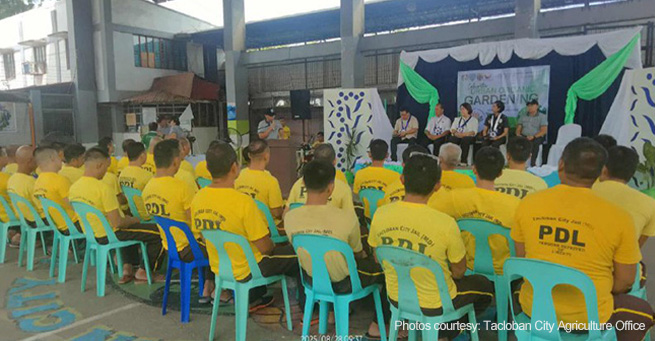
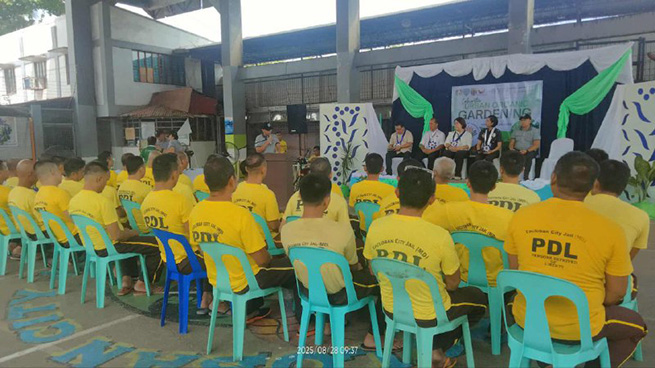
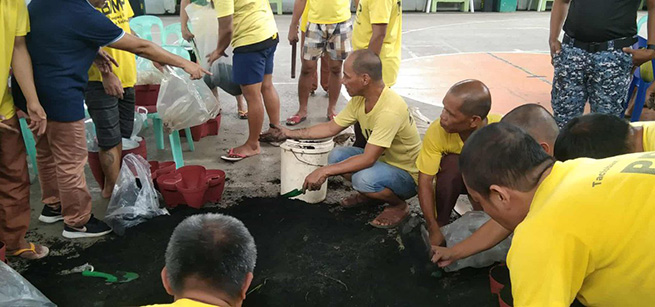
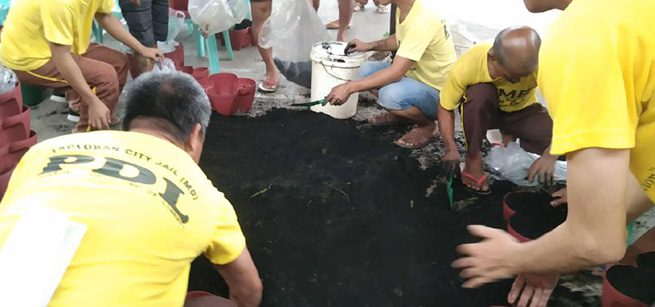
Backed by the Department of Agriculture, the urban gardening program has trained 36 PDLs from the male dormitory. In a span of three months, the trainees learnt the whole process from seed to seed, which involved activities like preparing seedlings, maintaining hydroponic systems, and harvesting crops.
To a great extent, this initiative has become something more than just food production for many inmates.
“This program, in my view, demonstrates how rehabilitation can be productive and dignified,” Tacloban City Agriculturist Chief Romelo Anade said.
According to Anade, the introduction of agriculture in the jail provides prisoners with another opportunity to reconstruct their lives by being given practical skills that they can utilize upon their release from the prison. Moreover, these skills can be instrumental in breaking the cycle of crime.
The gardens in the male dormitory have brought about a fresh atmosphere of order and accountability. There are schedules for watering the plants, the systems have to be kept in a certain manner and the tasks that require mutual help. Inmates have revealed that the work brings them a feeling of waking up to a new day with a purpose, even though they are confined.
If any, some are referring to a future that they had never considered before, such as tending a backyard garden, starting a small farming project or even having an agricultural-based livelihood when they go back to their communities.
What was initially a small rehabilitation measure has turned into a source of pride for the whole institution. Apart from this, the Tacloban City Jail is ready to be the city’s representative in the national-level urban agriculture competition, thus becoming the only jail facility in the Philippines that will compete at that level.
The recognition has put the jail on the map as a model showing how rehabilitation, food security, and skills training can be combined effectively, even in extremely crowded prisons.
The same principle is spreading even further in class teaching in Tacloban.
Urban farming and hydroponics are among the topics that students are being introduced to, thus combining agriculture with science and technology. When students are taught modern, space-saving farming methods at an early age, they naturally start to perceive agriculture not as a backward thing, but as a very creative, technologically advanced and a future career.
Though the environments could not be more different, one confined to jail cells and the other full of the vibrant energy of youth, the message remains one and the same: limited space does not mean limited potential, and with the right tools and mindset, growth can take place anywhere.
From a crowded male dormitory inside the Tacloban City Jail to classrooms that are molding young innovators, urban agriculture is quietly transforming lives across the city.
In areas where there is little room and fewer choices, seeds of change are being sown, both in hydroponic systems as well as in the people caring for them. For inmates who are remaking their lives and students who are looking forward to their future, farming has become a common ground for hope, discipline, and limitless possibilities.
In Tacloban City, growth is no longer confined to open fields. Sometimes, it begins behind bars.
(Photo Courtesy: Tacloban City Agriculture Office)

