
 Jazmin Bonifacio
 Posted on July 24, 2026 at 2:18 pm

TACLOBAN CITY — Government records say Biliran has achieved 100 percent irrigation coverage.
But for many farmers who depend on water to grow their crops, that number does not reflect what they see in their fields.
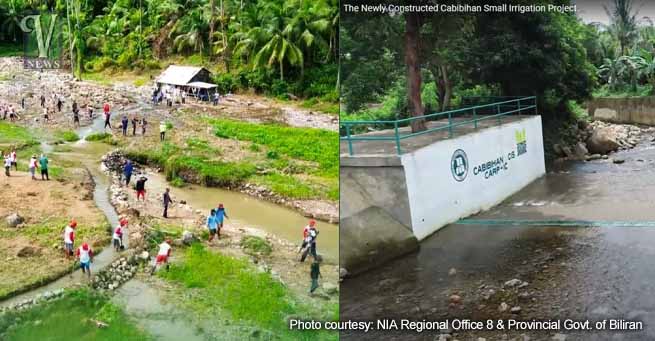
In some farming communities, canals are dry, dams are damaged, and irrigation facilities built years ago are no longer able to deliver water.
The result is a gap between what appears in official reports and what farmers experience during planting season.
For the Department of Agriculture (DA) in Eastern Visayas, this is a concern that needs closer attention.
DA Eastern Visayas Regional Executive Director Rodel Macapanas said irrigation figures do not always tell the full story. A facility may be counted as part of the irrigated area, but that does not automatically mean farmers are receiving water.
He explained that the reported coverage is based on the area an irrigation system was designed to serve.
“It is based on projected service area,” Macapanas said.
The figure shows how many hectares are expected to benefit from an irrigation project, but it does not always show whether water continues to reach those farms today.
For Macapanas, the question that matters most is whether the system is still working.
“Is irrigation water flowing as intended? ” he asked.
When government teams return to inspect irrigation facilities, they sometimes find conditions far different from what the records suggest.
“Guba na dam,” Macapanas said, describing what they see on the ground, broken dams that stop water from reaching farmers.
When irrigation structures fail, the actual area receiving water becomes much smaller than what is reflected in official figures. Farmers who are supposed to have irrigation access are forced to rely on rainfall instead.
When Irrigation Projects Are Turned Over
Macapanas said one of the challenges begins after irrigation projects are completed and transferred to farmer organizations.
Communal irrigation systems are usually handed over to irrigation associations, which are expected to manage and maintain them. The idea is to allow farmers to take part in caring for facilities that serve their communities.
But when major damage happens, many of these associations struggle to find money for repairs.
“The responsibility of the government is not `the repair’,” Macapanas said, explaining the situation after a facility has been turned over.
For small farmers, regular maintenance may still be possible. But repairing a damaged dam or rebuilding a collapsed canal requires funding that many farmer groups simply do not have.
Many members of these associations depend on farming for their livelihood and already face the daily challenges of production costs, low income, and weather-related losses.
Macapanas said these “poor associations” often cannot afford the major rehabilitation needed after disasters.
Because of this, damaged irrigation systems can remain unused while farmers wait for another source of funding to become available.
Help Arrives, But the Water System Remains Broken
The problem becomes more difficult when disasters strike.
After typhoons and other calamities, the DA uses its Quick Response Fund (QRF) to provide immediate assistance to affected farmers.
But Macapanas explained that the fund has limitations.
“The QRF is purely MOOE,” he said, referring to Maintenance and Other Operating Expenses.
Through the fund, the DA can provide farmers with replacement seeds, planting materials, and fertilizers to help them recover.
However, it cannot be used to repair damaged irrigation facilities.
This creates a frustrating situation for farmers. They may receive seeds and other assistance, but without working irrigation, planting remains uncertain.
Macapanas said rehabilitation requires separate funding, and because many irrigation systems have already been turned over, the process of securing support can take longer.
Getting additional funding for infrastructure repair, he said, “will definitely take a while.”
For farmers, every delay can mean losing another planting opportunity.
A Continuing Challenge for Eastern Visayas
The situation in Biliran reflects a larger challenge faced by Eastern Visayas, where agriculture continues to suffer from repeated typhoons, floods, and other disasters.
Macapanas said the region has improved its disaster response, but there is still much work to be done.
“We have to do more,” he said.
He pointed out that damaged agricultural facilities continue to add up, leaving communities waiting for repairs and rehabilitation.
For Macapanas, improving agriculture is not only about building more irrigation systems. It is also about making sure existing facilities continue to serve farmers long after they are constructed and turned over.
“We need to improve… our investments in terms of irrigation support,” Macapanas said.
For farmers in Biliran, irrigation is not just a figure in a government report.
It is the difference between a field that can be planted and one that must wait for rain.
Because in farming, a canal only matters when water actually flows through it.
Photo courtesy: NIA Regional Office 8 & Provincial Govt. of Biliran


 Leyte Communities Trained to Turn Abaca Into School Bags
  Napolcom Urges Stronger School-Community Ties After San Jose Shooting
  NBI Raids Illegal Gambling Operations Using Allegedly Cloned PCSO POS Machines
  PNP Reassigns Capoy; Cardiño to Head Eastern Visayas Police
  Eastern Visayas braces for barangay, SK polls as Senate weighs 5-year terms
  From Selling Vegetables to Growing Them