
 Ronnie Yanuario
 Posted on August 11, 2026 at 3:40 pm

Kananga, Leyte — For Glizelle Caceres, farming has become part of her new life.
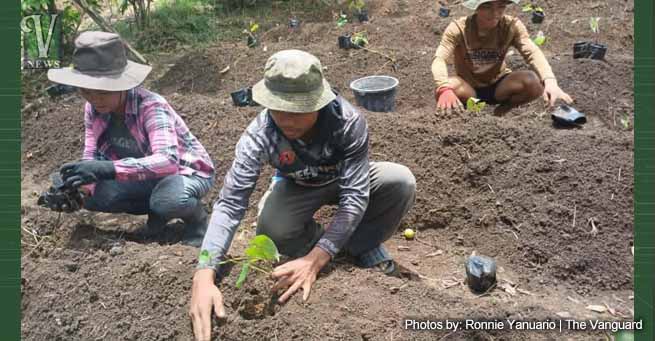
A former rebel who surrendered and returned to the government’s peace and development program, Caceres is now among the beneficiaries of an agricultural project being carried out in the mountains of Leyte and Biliran.
She is planting native trees, learning about organic farming, and preparing for the production of violet ube.
For her and her family, the project means another source of income. It also gives her a way to take part in activities that benefit the community where she now lives.
“I am one of the beneficiaries of the Growing One Million Native Tree Species with Integration of Organic Ube Production in the Islands of Leyte and Biliran project,” Caceres said.
“This initiative has been a great help to me and my family because it provides additional support for our financial stability, economic well-being, and livelihood.”
Her story is one of many behind a project that aims to plant one million native trees across Leyte and Biliran while giving former rebels, CAFGU members and members of People’s Organizations opportunities to earn from agriculture.
The project began with the establishment of native tree nurseries in August 2025. These were set up in 30 CAFGU patrol bases under the 93rd Infantry Battalion of the Philippine Army.
The patrol bases are now also being used for agricultural training and production.
Beneficiaries are being taught how to collect seeds, raise seedlings and manage nurseries. They are also being introduced to organic agriculture, agroecology and other farming practices.
The project currently involves about 1,200 CAFGU Active Auxiliary personnel and around 1,500 former rebels and members of People’s Organizations.
For the organizers, the idea is straightforward: give people a way to earn while putting idle or degraded land to productive use.
Trees that can also earn income
The one-million-tree target is the most visible part of the project, but the livelihood component is what makes it particularly important to the farmers taking part.
Native-tree seedlings are already being produced and sold for reforestation activities. This gives beneficiaries a chance to earn even before the project’s agricultural crops reach their first major harvest.
Organic violet ube is expected to provide another source of income.
Production officially started in January 2026, with the first commercial harvest expected in November.
Project organizers have also disclosed that European buyers have expressed interest in purchasing about 10,000 tons of organic violet ube.
For farmers, having a potential market matters. Production can increase only if growers know there will be buyers for what they produce.
The project is working with the Organicong Magsasaka at Mangingisda ng Rehiyon Otso (OMMRO) and Visayas State University (VSU) to provide technical assistance and training in organic agriculture, agroecology and sustainable farming.
The goal is not simply to distribute planting materials and ask beneficiaries to grow crops.
They need to know how to produce them properly, manage their farms and eventually make the enterprise work for their families.
From security posts to farm learning sites
Lieutenant Colonel Celeste Frank I. Sayson, commanding officer of the 93rd Infantry Battalion, 8th Infantry Division, Philippine Army, introduced the initiative with the idea of using the battalion’s existing facilities for more than security operations.
The patrol bases now serve as sites for tree nurseries and agricultural activities.
For beneficiaries, this means training and production can take place within their communities.
The project also brings together people with different backgrounds.
There are CAFGU members who continue to assist in security work. There are former rebels who are rebuilding their lives after returning to the government’s peace and development program. There are members of People’s Organizations and their families who depend on farming.
They are now working on the same agricultural activities.
For Caceres, this opportunity has helped her look beyond her past.
She said planting native trees also gives her a chance to contribute to protecting the environment and reducing the risks faced by communities during disasters.
Her experience shows why livelihood is an important part of reintegration.
Leaving an armed group is only one part of returning to civilian life. A person also needs a way to earn, support a family and become part of the community again.
Agriculture can provide that opportunity.
For farmers, the environment matters
The environmental side of the project is closely tied to farming.
Eastern Visayas has experienced some of the country’s strongest typhoons, including Super Typhoon Yolanda in 2013.
The disaster caused widespread damage across the region and exposed the vulnerability of communities living in areas affected by forest loss, damaged watersheds and unstable slopes.
For farmers, the condition of the land directly affects their livelihood.
Flooding can wash away crops. Landslides can damage farms. Strong winds can destroy plantations and trees that took years to grow.
This is why native-tree planting is being included alongside agricultural production.
The trees are intended to help restore forest areas and support watersheds, while farming provides the income that families need now.
The two activities are being carried out together rather than treated as separate projects.
Farmers can earn from seedlings and crops while contributing to the rehabilitation of their surroundings.
A CAFGU member’s experience
Staff Sergeant Florante P. Akbo, AGS, Philippine Army, patrol base commander of Katipunan Patrol Base in Barangay Katipunan, Silago, Southern Leyte, is also a beneficiary.
For Akbo, the project provides an additional source of support for his family.
“I am one of the beneficiaries of the Growing One Million Native Tree Species with the Integration of Organic Ube Production in the Islands of Leyte and Biliran project,” he said.
He said the project has helped address some of his family’s financial needs and strengthened their livelihood.
Akbo also sees the value of the tree-planting component.
By producing and planting native trees, beneficiaries can contribute to the protection of the environment while preparing for future risks from natural disasters.
His experience reflects one of the practical goals of the program: agriculture should benefit both the farmer and the land.
More than one million seedlings
For now, the project is still developing.
The native-tree nurseries are producing seedlings. Farmers are learning new production methods. Organic ube fields are being prepared for the coming harvest.
The first commercial ube harvest in November will be an important test of the project’s livelihood component.
If farmers can produce good-quality organic ube and connect with reliable buyers, the crop could become an important source of income for participating families.
The same is true for native-tree production. As demand for seedlings increases, the nurseries could provide beneficiaries with another agricultural enterprise.
For former rebels such as Caceres, however, the importance of the project goes beyond the crops they grow.
It gives them work.
It gives their families another source of income.
And it allows them to participate in activities that benefit their communities.
That is also where the project’s peacebuilding component becomes visible.
Peace is harder to maintain when families have few opportunities to earn a living. Providing people with practical skills and productive work gives them another reason to stay in their communities and invest in their future.
In the mountains of Leyte and Biliran, the work is still at an early stage.
The one million native trees have yet to be fully planted. The first major ube harvest has yet to come. The market opportunities still need to be developed and sustained.
But the work has already started.
At the nurseries, seedlings are being raised.
In the farms, ube and other crops are being cultivated.
And among the beneficiaries, people such as Caceres and Akbo are finding another way to support their families.
The success of the project will eventually be measured not only by the number of trees planted or the volume of ube harvested.
It will also be seen in the families that are able to earn more regularly, the farmers who gain new skills, the former rebels who build new lives, and the communities that become better prepared for the next typhoon.
For Caceres, it starts with the simple work of planting and farming.
The land provides the opportunity.
What grows from it will depend on the people who continue to work it.
Photos by: Ronnie Yanuario | The Vanguard


 Tribu Buliganay Wins as Buyogan Festival Returns
  Abuyog brings ambulances closer to remote communities
  Disaster Training Reaches Leyte’s Frontline Health Workers
  Dagami police nab alleged drug personality in Bayabas
  Random drug tests eyed for drivers in Eastern Visayas
  The Extra Liter Paglaum Pupils Had to Carry