
 Jazmin Bonifacio
Posted on November 17, 2026 at 11:35 AM
Tacloban City — For many residents in Tacloban, having a water connection does not always mean having water.
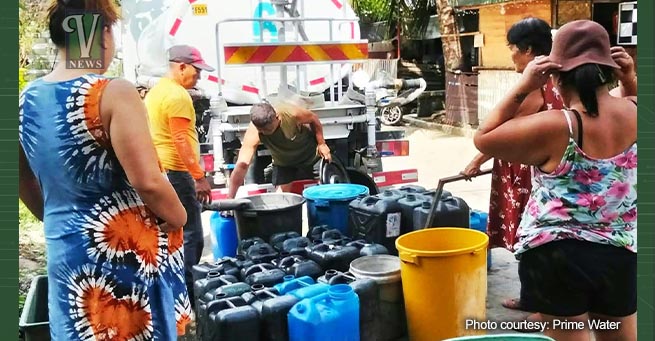
In parts of downtown and the northern barangays, residents have long dealt with weak water pressure and, at times, no water flowing from their faucets. Some households have learned to store water whenever supply becomes available, while others turn to wells, hand pumps or other sources when their taps run dry.
For a city with 138 barangays and a population of 259,353, the unreliable supply has become a daily problem for many families and businesses.
The Leyte Metropolitan Water District (LMWD) had 32,773 water connections in Tacloban as of December 2023. Across its entire service area, LMWD serves more than 53,000 water concessionaires.
Now, an P800-million project to replace and upgrade the city’s aging water network is more than 90% complete, according to LMWD General Manager Ronnie Cornico.
The remaining work includes connecting pipelines, flushing and sanitizing the lines, and conducting leak tests before the system is fully opened.
Cornico said the project is expected to be completed by December 2026, with 24/7 water service targeted to start in January 2027.
“Our agreement and timeframe given to Prime Water is strictly until December 2026,” Cornico told Vanguard in an exclusive interview. `We are already past 90 percent complete. The remaining work focuses on line interconnections, system sanitation, and final leak testing.’
Low pressure, dry faucets
The problem has affected not only communities on the city’s outskirts but also areas closer to the downtown district.
Erratic or no water service have previously been noted in some areas, including Utap and Abucay. Some businesses have had to use pumps and pressure tanks to draw water from the network.
In northern barangays, some households have also relied on wells and hand pumps because of limited access to piped water.
The situation is made worse by the condition of some of the city’s old pipelines.
LMWD said decades-old pipes have suffered from corrosion, mineral buildup, leaks and other damage, resulting in water losses and reduced pressure.
Cornico said water pressure in some areas has fallen to between 25 and 30 pounds per square inch (psi).
“The old pipes were filled with dirt, rust, and fractures, causing immense water loss,” Cornico said.
The project includes replacing these old lines and transferring households to new distribution pipelines. Areas in San Jose and Sagkahan are among those being connected to the upgraded system.
Final work underway
Crews are now completing the remaining pipeline connections and testing the new lines before the main valves are opened.
Cornico said he has been monitoring the project closely and meeting with the engineers and contractor every week.
“I monitor this project almost every single day and hold weekly coordination meetings with the engineers and contractor,” he said. “Once we connect the final lines and open the main northern valve, pressure will stabilize across the network.”
The leak tests are intended to identify problems in the new lines before the system is placed into full operation.
The project is not limited to Tacloban. The LMWD network also serves Palo, Santa Fe, Tanauan, Dagami, Tabontabon, Pastrana and Tolosa.
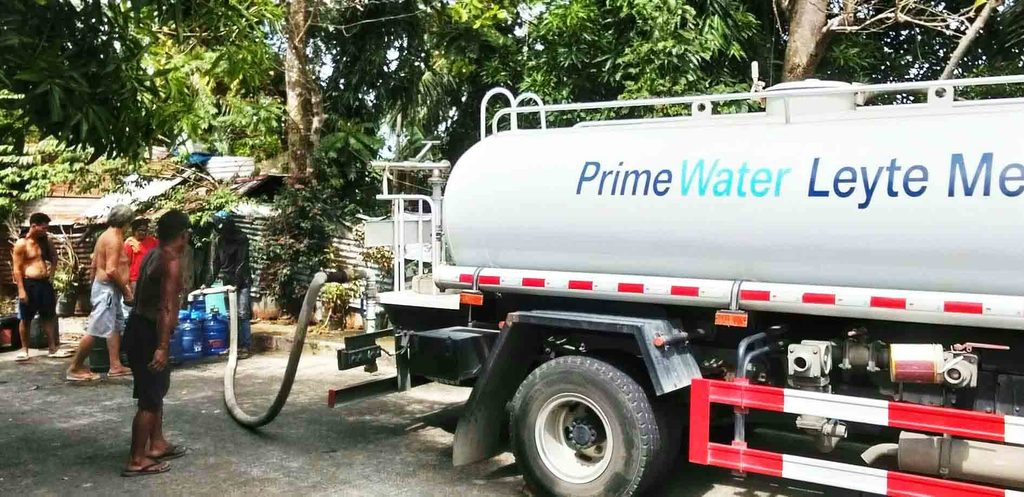
Photo courtesy: PrimeWater
Cornico said the expanded network will allow water from areas with available supply to be distributed to areas where demand is higher.
“This is not just for Tacloban,” he said. “By connecting supply from water-rich sources in Pastrana and the northern sector, we can share water across Palo, Tanauan, Santa Fe, and the rest of our seven towns.”
LMWD is also looking at an additional 30-million-liter-per-day expansion as demand increases, particularly in areas where new housing and commercial developments are being built.
Finding leaks before they become bigger problems
LMWD has also started upgrading its leak detection and maintenance operations.
Cornico said the district acquired satellite-based leak detection technology following a technology evaluation trip to China. The system is intended to help locate possible underground leaks without having to dig up long sections of roads.
The district has also added L300 service vehicles and maintenance teams for regular inspections and repairs.
Residents asked to wait
For residents who have dealt with years of weak or unreliable water supply, the next few months will mean more construction work and, in some areas, continued inconvenience.
Cornico acknowledged the disruption and asked residents to give the project more time to finish.
“We ask for a little more patience until December. By January 2027, Tacloban and our neighboring towns will finally enjoy the reliable 24/7 water service they deserve.”


 Eastern Visayas groups protest Trump visit, oppose Pax Silica
 Police seize P81,600 suspected shabu in Tacloban buy-bust
 Man caught in Tacloban P34K ‘shabu’ buy-bust
 Son finally finds mother’s grave 13 years after Yolanda
 13 years after Yolanda, survivors say Tacloban has yet to fully recover
 Yaokasin pushes one-day business permit renewal, inspections later