

 Jazmin Bonifacio & Rolly Magallanes
 Posted on Mar. 9, 2026 at 1:56 pm

TACLOBAN CITY — The morning sun rose over Tacloban City, but the usual buzz of tricycles along Avenida Veteranos and jeepneys lining up near the downtown market had noticeably slowed down.
Before dawn, long lines had already formed at gas stations near Daniel Z. Romualdez Airport. Motorcycles, tricycles, and delivery vans waited patiently as station attendants updated price boards to reflect another price hike.
“Increase na liwat,” remarked Junrey, a tricycle driver from Barangay 88.
“Kakulop P72 pesos an diesel, yana P77 pesos na,” Junrey added.
The fuel crisis gripping Eastern Visayas originated thousands of kilometers away. As tensions escalated in the Middle East and conflict erupted around Iran, global oil shipments became increasingly unstable. Tankers were rerouted, shipping insurance costs surged, and international markets reacted almost overnight.
For the Philippines, which relies heavily on oil imports, the impact was immediate.
In downtown Tacloban City, jeepney drivers gathered in small groups discussing whether they could continue operating with rising fuel costs.
Some had already reduced their trips, while others parked their vehicles entirely, waiting to see if fares would be adjusted or prices would stabilize.
Delivery trucks supplying rice, vegetables, and fish to Tacloban Public Market have begun charging higher transport fees, pushing up prices for consumers. Vendors say vegetables arriving from nearby farms now cost five to ten pesos more per kilo.
Fishermen in coastal communities are also feeling the strain. Many say gasoline costs for their boats have nearly doubled in recent weeks, forcing them to cut back on longer fishing trips.
The pressure is not limited to Tacloban.
In Palo, Leyte, small roadside businesses have started adjusting prices as delivery costs climb.
Transport groups in Ormoc City have warned they may soon request fare increases if fuel prices continue to rise.
Meanwhile, farmers in Calbayog City and Catbalogan City in Samar report that transporters are charging higher rates per sack of produce delivered to markets.
Even ferry operators connecting smaller islands are reviewing their schedules in an effort to conserve fuel.
What began as a distant geopolitical conflict has now quietly seeped into everyday life across the region.
Amid growing concern, Senator Francis Escudero issued a press release on March 3, 3036, calling on the Department of Energy to prepare a comprehensive contingency plan to cushion Filipinos from the potential surge in fuel prices.
Escudero warned that further instability in the Middle East could trigger serious disruptions in global supply, significantly affecting the Philippine economy.
“Hindi na bago sa atin ang ganitong krisis kaya dapat handa ang bansa bago pa man lumala ang sitwasyon,” the senator said.
He emphasized that proactive planning is essential to ensure the country is prepared for worsening global conditions.
“Mahalaga na ito ay ating mapaghandaan nang maayos upang matiyak na ang ating mga kababayan ay may maasahang proteksyon kapag lumala ang kaguluhan sa Gitnang Silangan,” he added.
Escudero also urged the Department of Trade and Industry to strengthen price-monitoring mechanisms and consider temporary price caps on essential goods if fuel-driven inflation accelerates.
“The government must be prepared to cushion the impact on consumers, especially low-income families who are most affected by rising costs,” he stressed.
Back at the gasoline station in Tacloban City, Junrey finally reached the pump after waiting nearly an hour.
He handed the attendant a crumpled 500-peso bill and said, “Half tank la.”
Around him, more tricycles and motorcycles continued to arrive, their drivers hoping to fill up before prices climbed again.
As Escudero warned, the country may not be able to control global events.
But for communities across Eastern Visayas, the fuel crisis is no longer just international news — it is now part of daily life.
(Photo by: The Vanguard)


 IMNet helps Tacloban journalists prepare for risks in the field
 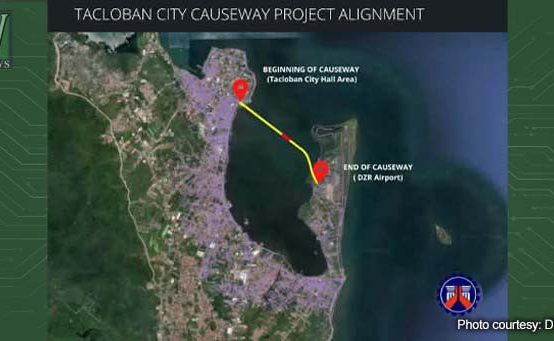 DPWH to Push Through with P4.77B Tacloban Causeway Project Despite Contract Terminations
  2 Suspected Drug Personalities Nabbed in Tacloban Buy-Bust
  EVMC spends P1.08B for Zero Balance Billing
  Leyte Farmers Bring a Forest Back
  P6.9B Project to Help Eastern Visayas Communities Prepare for Disasters