
 Beejay Balagbis
 Posted on August 26, 2026 at 5:55 am

Social media has become the town hall of our time, the space where unheard voices find a platform that formal channels too often deny.
Recently, an anonymous graduating college student posted an open letter addressed to the Office of Governor Evardone, seeking clarity on the release of cash assistance under the Bawat Barangay ay Makikinabang Program, intended for five selected fourth-year college students in every barangay. The letter has struck a chord, circulating widely and drawing sympathy from students and parents alike—but it also deserves careful, balanced examination, not to dismiss the writer’s concerns, but to place them in proper context and to acknowledge the realities of public service.
To begin with, there is much in the letter that merits genuine consideration. The tone is notably respectful; the writer repeatedly disclaims any intent to disrespect or besmirch the office, framing the message simply as an inquiry born of genuine need.
Fourth year is undeniably one of the most financially burdensome stages of a college education, with thesis expenses, required on-the-job training costs, transportation, school requirements, and even mandatory educational tours placing heavy demands on students and their families.
For those who do not have the means to meet these costs on their own, assistance of this nature is not a luxury—it is often the very thing that stands between finishing a degree and having to stop short.
The decision to remain anonymous is also far from unreasonable. In many communities, raising concerns against local officials can carry real risk, and students who are about to complete their studies understandably fear being singled out or treated unfairly for speaking up.
The writer also offers a practical justification for going public: that private inquiries frequently go unanswered, leaving public pressure as one path to getting a response. That is a frustration many people recognize, even as we acknowledge that formal channels exist precisely to address such concerns systematically.
It is equally important, however, that we view this situation with fairness toward the Provincial Government and the leadership of Governor Evardone. Implementing programs that flow from the national level to the local level is rarely as straightforward as it may appear.
Funds coursed from the national government often pass through multiple layers of verification, budgeting, and release protocols—steps that are designed to ensure accountability, prevent misuse, and guarantee that assistance reaches those truly intended to benefit.
These procedures may seem slow from the perspective of those waiting, but they are legal and governance requirements that no responsible public official can simply bypass. Governor Evardone’s office, like any provincial administration, must operate within the bounds of national treasury rules, auditing requirements, and inter-agency guidelines.
It is not always within the Governor’s sole power to speed up releases when bottlenecks occur at the source of the funding, and it would be unfair to assume delay means inaction or neglect at the provincial level.
Questions have also been raised about the selection of scholarship grantees, each set to receive P20,000 from the national government. If the process followed the proper guidelines, transparency and good governance demand that the list of beneficiaries be posted in conspicuous places within each barangay.
This is not an unreasonable expectation—it is a standard practice that gives the public confidence that selections were made fairly, based on clear criteria, and free from favoritism. Posting the list addresses concerns at the source, reduces speculation, and helps both the provincial government and the barangay officials build trust with the community. It also gives those who were not selected a clear understanding of how decisions were reached, which minimizes unnecessary friction and unfounded accusations against the Governor’s office.
Returning to the letter’s specific points: the writer notes that it has been “more than a month,” but does not specify a month from when—from the date of the public announcement, from the date students were selected, or from the date funds were officially transferred or authorized.
Without a clear timeline of official actions, it is difficult to judge whether the waiting period is unreasonable or whether it falls within the normal timeframe required for verification, documentation, fund transfer, and other administrative steps that necessarily precede disbursement.
Similarly, the observation that assistance has already been distributed in other barangays in Luzon and some parts of the Visayas lacks necessary context. Are those areas operating under the exact same guidelines? Were their funds released on the same schedule? Different provinces may have different arrangements, different funding sources, or different timelines set by national agencies, and drawing direct comparisons without confirming these details can be misleading.
The letter also mentions that responsibility for distribution shifted from the barangays to the provincial office. This kind of adjustment is not unusual in government programs; it can happen to ensure uniform implementation, to strengthen oversight, or to comply with new instructions from the national funding agency.
It does not necessarily signal error or unnecessary delay. It is reasonable for citizens to ask for clarity, but it is also reasonable for public offices to need time to explain policy changes and adjust workflows accordingly.
As for the writer’s choice to remain anonymous, while understandable, it is also worth noting that formal inquiries—whether filed with the Governor’s office, the provincial information desk, or through Freedom of Information channels—are generally handled with confidentiality and professionalism, and are often the fastest way to get accurate, official answers directly from the source.
In the end, this situation calls for transparency on both sides. Governor Evardone’s office can best address these concerns by issuing clear, regular updates: confirming the status of the funds, explaining the timeline for release, and reminding barangay officials of the need to post beneficiary lists publicly.
These steps do not cost anything, but they go a long way toward calming public anxiety and demonstrating that the administration is responsive and accountable. On the part of those seeking answers, patience paired with due process is also essential. Sincerity is a strong starting point, but well-founded, respectful inquiry—rather than pressure alone—is what yields reliable, lasting results.
Public accountability is the right of every citizen, and that right includes asking where funds stand and how selections are made. But accountability works best when it is paired with fairness—fairness to those in need of assistance, and fairness to those entrusted with the heavy responsibility of administering public programs lawfully and properly.
Until that open, respectful exchange happens on all sides, questions will linger, and the full truth will remain just out of reach.


 NIA aid to help Eastern Samar farmers market their palay
  Honoring Bravery, Reclaiming History: Balangiga Marks 125 Years of its Legendary Encounter
  Marcos inspects Felipe Abrigo Memorial Hospital in Guiuan
 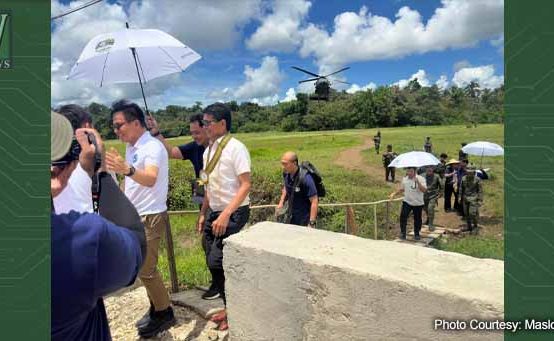 Road projects to make travel easier, livelihoods better in Maslog
 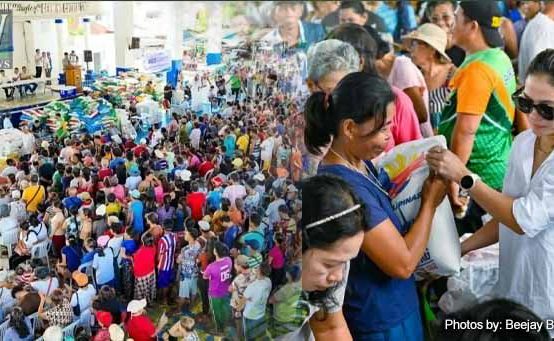 Can-avid LGU Distributes 10Kg Rice Aid to 5,000 Families
 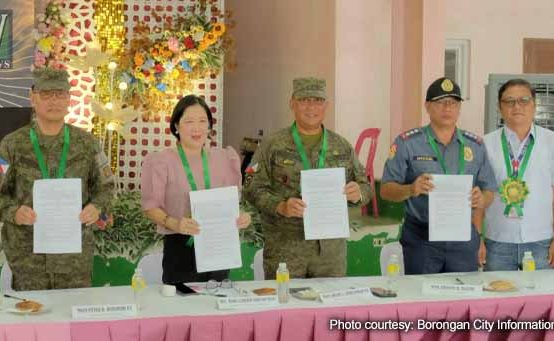 Borongan’s Insurgency-Free Status Boosts Hopes for Eastern Samar Tourism