
 Rolly Magallanes
Posted on October 24, 2026 at 10:27 PM

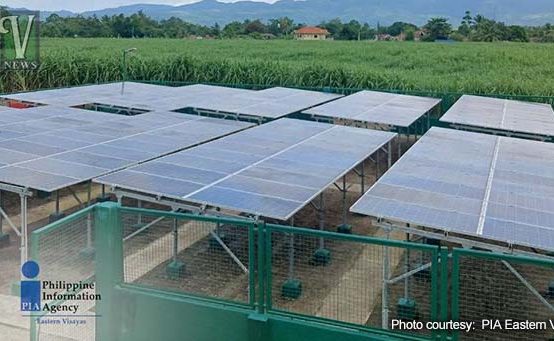
Tacloban City — Two solar-powered irrigation projects in Leyte and Samar are expected to help farmers keep their fields productive as Eastern Visayas prepares for the possible effects of a very strong El Niño.
But while the new facilities will give farmers better access to irrigation, questions remain about their capacity to sustain crops if water supplies dwindle during prolonged dry spells.
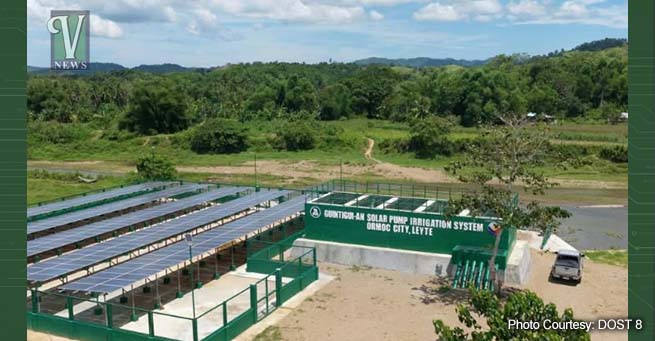
The Guintigui-an Solar Pump Irrigation Project in Ormoc City is expected to serve 87 farmers tilling 70 hectares of farmland. In Calbayog City, the Cabacungan Solar-Powered Irrigation Project is designed to benefit 24 farmers cultivating about 12 hectares.
Together, the projects are expected to provide irrigation to 82 hectares of agricultural land.
The National Irrigation Administration (NIA) in Eastern Visayas has formally turned over the Guintigui-an facility to its beneficiaries, while the Cabacungan project has completed its final test run ahead of its turnover and full operation.
The Guintigui-an facility is equipped with five 15-horsepower submersible pumps, solar pumping facilities, a pipe network and a farm-level irrigation system designed to provide water throughout the year.
Once fully operational, the Cabacungan project is also expected to provide a more dependable water source for rice farmers in the area. NIA has yet to specify its turnover date in the information provided.
Personnel from NIA’s Eastern-Western Samar Irrigation Office, members of the Cabacungan United Farmers Irrigators Association Inc., Department of Agriculture technicians, barangay officials and contractors attended the final test run to assess the facility’s readiness.
NIA Regional Manager Jaime de Jesus said the Guintigui-an project offers farmers renewed hope as they face climate-related challenges.
“Hindi lamang po ito simpleng turnover ng isang irrigation facility. Ito ay turnover ng isang bagong pag-asa,” de Jesus said.
The use of solar energy is also expected to help farmers reduce their dependence on fuel-powered pumps, easing irrigation expenses.
Still, access to irrigation does not guarantee that crops will be spared from drought. Much will depend on the availability of water, particularly if dry conditions last longer than expected.
The two projects cover only 82 hectares, leaving questions about support for other farming communities, especially those that depend on rainfall or have limited access to irrigation.
NIA and the Department of Agriculture’s contingency measures for severe water shortages, along with the status of other irrigation projects being prepared or rehabilitated, could help paint a clearer picture of the region’s readiness.
The agencies’ plans for managing water supplies and assisting farmers outside the projects’ service areas will also be important in protecting rice production.
For farmers, the test of these investments will come when water is needed most. Their ability to sustain irrigation during difficult weather conditions could help determine whether the projects will make a lasting difference to harvests and local food supplies.
Photo courtesy: DOST8


 LTFRB-8 Warns PUV Operators Against Overcharging Ahead of Undas
 DOST Weather Stations to Help Farmers Beat Dry Spells
 Being Martin Romualdez isn’t a Crime, Due Process Must Outrun Public Prejudice
 Eastern Visayas Army Chief Urges Soldiers, Youth to Uphold WWII Veterans’ Legacy
 Solar Irrigation Helps Leyte Farmers Save on Fuel Costs Amid El Niño
 Leyte Farmers Turn Irrigation Canal Spaces Into Vegetable Gardens