
 Rolly Magallanes
Posted on October 24, 2026 at 09:57 AM

Tacloban City — Knowing when rain will come or how long a dry spell might last can make a difference for farmers deciding when to plant, how to manage their water supply and how to protect their crops.
To help farmers make those decisions, the Department of Science and Technology (DOST) is expanding localized weather monitoring in Eastern Visayas through Project SARAI.
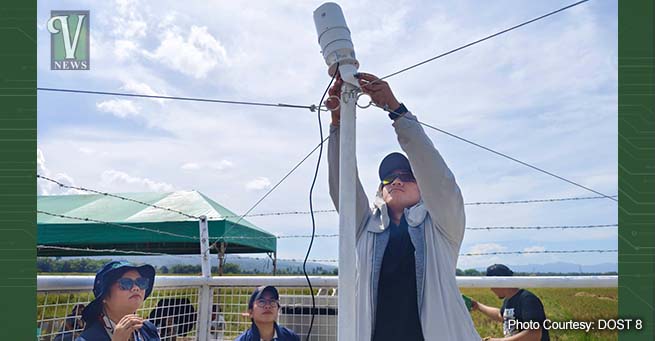
The agency has installed an Automatic Weather Station (AWS) in Barangay Lower Hiraan, Carigara, Leyte, followed by another in Barangay Surok, Borongan City, Eastern Samar.
Engr. Florentino L. Quiñones Jr., supervising science research specialist and Project SARAI focal person, said the stations provide near-real-time weather and climate information that can help farmers plan their activities and manage their crops based on local conditions.
The stations collect weather data that can support crop production, agricultural research and the preparation of crop-specific advisories.
Through the SARAI Knowledge Portal, users can check daily weather forecasts and rainfall outlooks. The system also uses satellite data to monitor crop health and vegetation conditions and assess possible impacts of flooding, drought and water stress.
By combining weather station readings with forecasting tools, Project SARAI can provide municipality-specific information, including rainfall forecasts and recommendations on crop, nutrient and water management.
For farmers, such information can help them decide when to plant, adjust their farming schedules or conserve water when rainfall is scarce.
In Eastern Samar, the new weather station in Borongan is expected to help local officials and farming communities prepare for possible dry spells and drought as the region braces for the effects of El Niño.
DOST Eastern Samar Provincial Director Arnaldo Amosco Jr. said the station measures air temperature, atmospheric pressure, rainfall and wind speed, providing local weather observations that can help guide agricultural planning.
He said the information could be useful, particularly in areas vulnerable to below-normal rainfall and prolonged dry conditions.
DOST also conducted hands-on training for local government personnel on how to operate and maintain the equipment.
Local governments are expected to use the data not only for agricultural planning but also for disaster preparedness and extension services.
However, installing the weather stations is only part of the effort. Farmers must also be able to access and understand the information in time to use it in making decisions.
For farmers who depend on rainfall or have limited access to irrigation, knowing what weather conditions to expect could help them manage water supplies, plan farm activities and reduce potential crop losses.
Through Project SARAI, DOST aims to bring weather information closer to farming communities in Eastern Visayas, where timely forecasts can help farmers prepare for conditions that could affect their crops and livelihood.
Photo courtesy: DOST8


 LTFRB-8 Warns PUV Operators Against Overcharging Ahead of Undas
 Solar Irrigation Projects Strengthen Drought Preparedness in Eastern Visayas
 Being Martin Romualdez isn’t a Crime, Due Process Must Outrun Public Prejudice
 500 Leyte Students to Receive Free Eyeglasses After Vision Screening
 Eastern Visayas Army Chief Urges Soldiers, Youth to Uphold WWII Veterans’ Legacy
 Solar Irrigation Helps Leyte Farmers Save on Fuel Costs Amid El Niño