
 Jazmin Bonifacio
 Posted on Mar. 17, 2026 at 4:18 am

TACLOBAN CITY — The Regional Development Council (RDC) Environment Committee is launching a comprehensive “fact-finding effort” to determine whether the Mining Act of 1995 has truly benefited the people of Eastern Visayas or if the region’s natural wealth is being exploited through purely extractive practices.
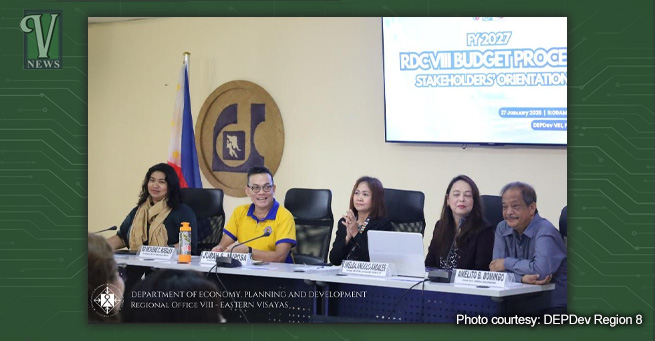
Judah Aliposa, the newly appointed co-chair of the committee and a Private Sector Representative (PSR), announced that the body will function as a “Senate of the region” to investigate whether the decades-old law has delivered its core promises.
“The Mining Act of 1995, administered by the Mines and Geosciences Bureau (MGB), promises to create development—more jobs and income through the mining industry,” Aliposa stated during a recent interview. “We are demanding accountability from the government, particularly the MGB, to fulfill that promise.’
At the center of this initiative is a crucial meeting scheduled for March 17, where the MGB has been summoned to provide an update on all ongoing operations, mining claims, and applications across all six provinces of Region 8. Currently, the region has a total of over 40 mining claims scattered across various provinces, with several more in the application stage.
The committee aims to move beyond the legal technicalities and examine the actual economic impact on local communities. Aliposa stressed the need to assess whether the substantial budgets of government agencies are being utilized effectively or if they are being mismanaged, while local residents receive minimal benefits from the exploitation of their resources.
The urgency of this audit was prompted by troubling reports from MacArthur Leyte, which Aliposa underscored as a “scarcity paradox” in the region: despite being naturally abundant in minerals and water, the local population often struggles with poverty and lacks basic utilities.
Aliposa cautioned that the current administration’s regional development plan, which extends only until 2028, is insufficient to safeguard the region’s finite resources.
He advocates for a longer-term vision aligned with the Spatial Plan or Regional Physical Framework Plan for the Visayas, looking ahead to 2045 and 2050.
“Personally, my long-term goal is to ensure the protection of our natural resources,” Aliposa stated. “Any developments must benefit the people of Eastern Visayas. We must ensure that local communities and governments derive maximum benefits.”
The committee, comprising fewer than 30 members, urges Civil Society Organizations (CSOs) and individual citizens to go beyond social media activism and formally report their grievances to the RDC secretariat.
By elevating these concerns to the official agenda, Aliposa believes that ordinary citizens can play a direct role in regional governance, ensuring that the region’s wealth remains in the hands of those who inhabit it.
(Photo courtesy: DEPDev Region 8)


 Northern Samar Approves Right To Care Ordinance: Residents Can Choose Healthcare Representatives
  Leyte Communities Trained to Turn Abaca Into School Bags
  Napolcom Urges Stronger School-Community Ties After San Jose Shooting
  NBI Raids Illegal Gambling Operations Using Allegedly Cloned PCSO POS Machines
  PNP Reassigns Capoy; Cardiño to Head Eastern Visayas Police
  Eastern Visayas braces for barangay, SK polls as Senate weighs 5-year terms