
 Jazmin Bonifacio
 Posted on May 10, 2026 at 10:37 am

TACLOBAN CITY — In the early hours before dawn, the shoreline of Barangay 88, San Jose, would usually bustle with quiet activity. Fishermen would prepare their nets under dim lights, check their boat engines, and set out into San Pedro Bay, a routine that has supported families in the area for generations.
However, during Balikatan 2026, this routine came to a halt. For several days in early May, the sea was declared off-limits.
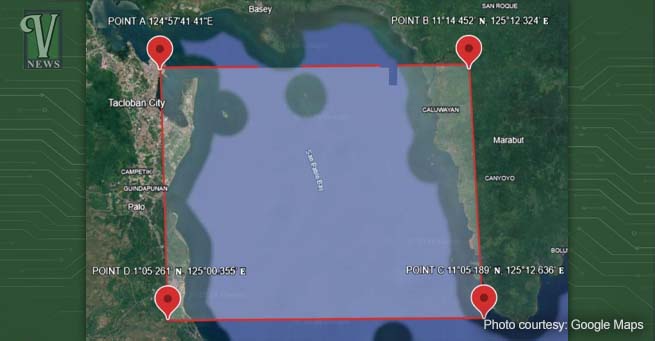
An advisory from the Coast Guard District Eastern Visayas (CGDEV) issued by Commodore Jonathan C. Marfil PCG on April 27, 2026, Navigational Warning Number NSD 001-2026, designated portions of San Pedro Bay in Tacloban City as a restricted exercise area from May 5 to May 7, 2026, in connection with the Philippines-United States Balikatan Exercise (BK41-26).

The specified zone, marked by precise maritime coordinates across the bay, was placed under strict caution. Mariners were instructed to exercise extreme caution and avoid or navigate carefully in the vicinity while joint military drills were taking place.
To military planners, this was a standard safety measure for one of the largest annual exercises between Philippine and United States forces.
But for the fisherfolk of Tacloban, it meant the sudden suspension of their sole source of income.
A Sea Turned Into a Restricted Zone
Tacloban was one of the operational areas for the 41st iteration of Exercise Balikatan, a significant military exercise involving maritime drills, air defense simulations, and missile deployment training.
The exercises took place from April 20 to May 8, 2026, concluding with a formal ceremony at Camp Aguinaldo attended by top defense officials, including Defense Secretary Gilbert Teodoro, AFP Chief of Staff Gen. Romeo Brawner Jr., and Army Chief Lt. Gen. Antonio Nafarrete. Military leaders praised the drills for enhancing interoperability and regional defense readiness.
However, along the coast of San Jose, these national assurances felt distant.
When fishing was halted due to the navigational warning and restricted zones, hundreds of fishermen across Tacloban’s coastal barangays were forced to stay on land.
“Diri kami gin tutugutan maka palawod (the sea became off-limits to us),” said 64-year-old fisherman Daniel Morillo.
“Kun diri kami maka panagat, waray kami income, pero nag papabilin an amon gastuson. (When fishing is prohibited, our income disappears instantly, but our expenses remain.)”
The disruption was exacerbated by fear triggered during the drills.
On May 5, 2026, residents reported hearing an explosion, later linked by authorities to strike simulations involving a US Tomahawk missile, deployed near Tacloban airport and hitting a designated target at Fort Magsaysay in Nueva Ecija, Luzon.
For many, the sound was terrifyingly unclear.
“Naka bati kami dako na buto han maagahon han Mayo 5 (There was a sudden deafening explosion midnight of May 5),” Morillo recalled.
“Huna namon crash landing. Nag kagawas kami, diri kami maaram ano natatabo. (We thought an airplane had crashed. People rushed outside because nobody knew what was happening)”
“Huna namon gin aatake na ngan gyera na We thought we are being attacked and there is already war),” Leonard Romero another fisherman said.
The lack of immediate explanation led to what residents described as “kabaraka” – widespread fear spreading through coastal communities.
“Waray may nag kadi na mga opisyal o bisan man mga sundalo nga api han Balikatan (There was no explanation from authorities or the troops conducting the drills),” Morillo said.
Hunger at the Shoreline
While military operations unfolded offshore and near the airport, the economic impact deepened on land.
According to Losanto Castillo, a 67-year-old President of Tacloban Fisherfolks Association, hundreds of families lost their daily income during the no-sail period. Yet daily expenses continued, with some households spending up to P300 a day without earning anything.
Although representatives from Tacloban City DSWD reportedly prepared lists for assistance, however, residents said no help arrived.
“The lists are there, but our kitchens are still empty,” Morillo said.
In desperation, some fishermen admitted they eventually defied restrictions and returned to sea.
“Diri namon gusto an samok (We do not seek trouble),” Romero, said.
“Pero kun gutom na an imo mga anak, waray kana mahimo. (But when your children are hungry, what choice do you have?)”
“We Will Be Wiped Out”
For Romero, the presence of foreign troops and missile systems signals a deeper concern.
“Kita an maiigo (We will be wiped out),” he said.
“Target an Tacloban kun mag ka may ada gyera dara hini na Baliktan dinhi (Tacloban could become a target if war breaks out because of these military activities here).”
He fears the city’s growing strategic role could expose civilians if tensions in the region escalate.
“Purupangisda la kami (We are just fishermen),” he said.
“Pero kun mag ka may ada gyera, kita an igo ha agway (But if war comes, we will be the ones caught in the crossfire),” he added.
Security vs. Survival
For Losanto Castillo, president of the Tacloban Fisherfolks Association, Balikatan 2026 exposed a painful imbalance.
“While national leaders discuss defense and regional stability, fishermen are physically barred from their own waters,” he said. “We are being forced to choose between national security and our next meal.”
Castillo pointed to what he called a contradiction in priorities.
“What we need is rice, but they bring diesel for themselves,” he said, referring to fuel and logistical support for military operations while fishing communities struggle with rising costs.
He also criticized the exclusion of fisherfolk’s voices in development decisions, noting that councils such as the Barangay Fisheries and Aquatic Resources Management Council (BFARMC) are often bypassed.
Castillo said those most affected are rarely heard.
Navigational Warning Lifted, but struggles remain
On May 5, 2026, before the conclusion of Baliktan 2026 that officially ended on May 8, 2026, Coast Guard District Eastern Visayas announced that Navigational Warning NSD 001-2026 had been lifted.
All restrictions in San Pedro Bay were officially removed, and normal maritime navigation resumed.
Authorities also thanked maritime stakeholders for their cooperation during the exercise period.
But for fishermen, the impact did not end with the lifting of the warning.
Fisherfolk in Barangay 88 are now calling for stronger consultation, transparency, and support whenever military activities affect civilian waters.
“We are not enemies of the government,” Castillo said. “We only want to live peacefully and feed our families.”
Castillo added that if such exercises continue, communities must not be left behind.
“If these drills bring fear, hunger, and danger, then there must at least be real consultation and immediate assistance,” he said.
We Cannot Eat Security
For Tacloban’s fisherfolk, Balikatan 2026 is no longer a distant defense exercise described in official briefings.
It is the grounded boat by the shore, the empty cooking pot at home, and the silence of a sea that was once their livelihood.
As Tacloban becomes increasingly entangled in regional military operations, the question from its shoreline communities lingers. How can there be national security when the people who sustain the nation are left hungry, imperiled, and unheard?
Photo by: Jazmin Bonifacio


 EVMC spends P1.08B for Zero Balance Billing
  Leyte Farmers Bring a Forest Back
  Northern Samar Approves Right To Care Ordinance: Residents Can Choose Healthcare Representatives
  LANDBANK Launches Cash-Lite Campus Program at LNU
  Leyte Communities Trained to Turn Abaca Into School Bags
  Napolcom Urges Stronger School-Community Ties After San Jose Shooting