
 Jazmin Bonifacio
 Posted on June 2, 2026 at 8:57 pm

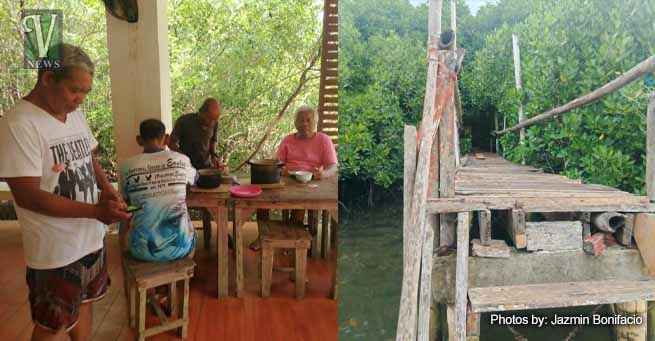
TACLOBAN CITY — Along Tacloban’s coastline, the Paraiso Mangrove Eco-Park is being kept alive by a small group of aging volunteers who continue working despite limited support, shrinking numbers, and growing pressure.
At the center of it all is Roque Regis, president of Paraiso Mangrove Incorporated, who speaks plainly about what the group has become.
“Han una damo kami,” Regis said. “Yana, pira nala kami nga nag padayon.” (At first, there were many of us. Now, only a few of us continue.)
From an original 28 members, the organization has dropped to 13 on paper, with only about seven actively doing the daily work of maintaining the mangroves.
For those who stayed, there is no regular pay and to survive, the group relies on what they call a “labor for food” system, working for months in exchange for food supplies, plus a small share from visitor fees to keep basic operations going.
Most of the remaining volunteers are elderly members who feel abandoned by the city government, yet they continue to volunteer out of a commitment to the mangroves they have helped protect for years.
Regis admits it has become difficult to bring in younger people.
“Diri ini attractive ha mga kabataan kay waray man kita,” he said. “Pero para ha amon, responsabilidad namon ini.” (It’s no longer attractive to the youth because there’s no income. But for us, this is still a responsibility.)
The lack of support is also visible in the park’s infrastructure. When a bridge needed repair, an engineer estimated one concrete post would cost around P47,000. With only P15,000 in donations, the group chose to do the work themselves.
“Kung ma asa ka ha estimate, diri talaga kakayahon,’ Regis said.“ Amo nga gin hihimo namon ha amon makakaya.” (If you rely on the estimate, it really can’t be done. So we just did it through our own effort.)
After Typhoon Ursula damaged parts of the park, including floating cottages, volunteers rebuilt them by hand using salvaged materials and whatever they could find.
Despite these efforts, Regis says they often feel left behind.
“May ada mga patapod tikang ha mga politiko, pira nga mga lokal na mga opisyal ha gobyerno, pero ha aktual nga bulig, waray,’ he said. (There are promises from politicians and government officials, but in terms of actual help, there’s none)
He also points to a P500,000 grant from the Department of Labor and Employment for a catering project was sent to the barangay instead of the organization in 2021. Years later, the money is still tied up in disputes, and the volunteers are still waiting for the equipment and support they were promised.
The “Study Hub”
Beyond survival, the eco-park has become a learning space for students and researchers in Tacloban. Schools regularly visit for fieldwork and environmental studies, turning the area into what Regis calls a “study hub.”
“Dinhi hira nababaro parti hiton mangroves, climate change,” he said. “Kahit papaano, nakabulig kami ha edukasyon nira.” (Here, they learn about mangroves and climate change. In some way, we are also helping with education.)
Volunteers, many of them elderly, also attend climate and environmental trainings so they can guide visitors and explain the importance of mangrove ecosystems.
But Regis says the hardest part is not the work itself, it is the feeling of being misunderstood.
At times, the group says they have been labeled as “opposition” or “anti-government,” by some local officials, the park is often under watch.
Regis says that military and intelligence units monitor them, and has created a culture of fear, especially among the elderly female members.
“Masakit la kay baga man kami hin kaaway kun tratuhon nira,” Regis said. “Waray kami lain nga paniyo kundi an ma protektahan la an amon lugar, an mangroves.” (It hurts to feel like you are being treated as an enemy. We don’t have any other goal except to protect our place and the mangroves.)
To avoid confusion, they now coordinate activities with local authorities through formal letters before working in the area.
Despite everything, the volunteers continue returning to the muddy shoreline, repairing, planting, and rebuilding what storms take away.
For them, the mangroves are not just trees along the coast. They are protection for Tacloban itself.
“Kun waray ini, ” Regis said, “mas delikado an cuidad.” ( “If this isn’t here, the city would be more vulnerable.)
And so the work goes on, not because it is easy, but because a few people have chosen not to walk away.
Photos by: Jazmin Bonifacio


 Alleged Drug Pusher Falls in Tacloban Anti-Drug Operation
  P267K Shabu Haul Leads to Arrest of Suspect in Tacloban
  Government Agencies Provide Relief to Tacloban Coastal Communities Affected by Balikatan Drills
  New Minimum Wage Now in Effect Across Eastern Visayas
  DepEd says revised school calendar will allow longer teaching periods
  DOH steps up vaccination drive in remote Eastern Visayas areas