

 The Vanguard
 Posted on June 19, 2026 at 3:27 am
By Phil Harold Mercurio
“Vox populi, vox Dei” – Latin Proverb
Watching from my window seat as the plane takes off from DZR Airport, the green contours of the lush mountains of Danglay come into view, reminding me of the rainforest ecosystem 177 kilometers north on the island of Samar—close to the heart of every Calbayognon.
At 32,000 feet above sea level aboard the Manila-bound plane from Tacloban City, I finally have the luxury of time to gather my thoughts on how the people of Calbayog fervently fought to protect their remaining protected forest.
Yes, you heard it right! The voice of the people won. They have successfully defended their water stronghold. It was not until February 24, 2026, that it was officially announced that GWEC’s Wind Turbine Project at the Calbayog Pan-as Hayiban Protected Area (CPHPL) was finally called off.
A week before the City Council of Calbayog’s regular session, rumors circulated that the wind turbines would no longer push through at the CPHPL. Many concerned citizens eagerly inquired with the members of the Save Calbayog Rivers Foundation Inc. (SACRIFICE) whether there was truth to the whispers that the Singapore-based foreign investor had indeed backed out of installing 13 wind turbine generators inside Calbayog’s primary watershed.
GWEC initially proposed 37 wind turbine generators to be built in Calbayog.
It was at the Sanguniang Panglungsod of Calbayog that the Vena Energy (GWEC’s mother company) representative revealed that the company has decided not to proceed with the project as previously proposed and instead will relocate it to the coastal ridges of Tinambacan District within Calbayog City.
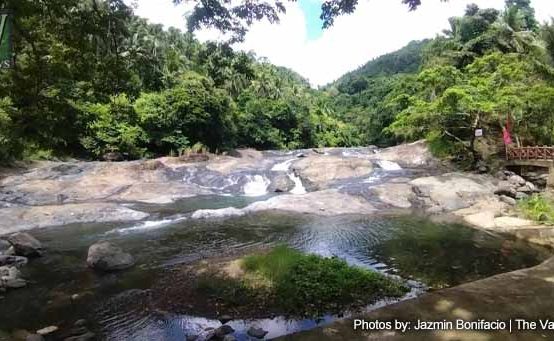
The CPHPL is the remaining lungs of the city, consisting of Parcel 1: the Pan-as Protected Area, and Parcel 2: the Hayiban Protected Area, with a combined area of 5,067.93 hectares. Known as the CPHPL, it is situated at the heart of Calbayog City, Samar, comprising forests, streams, and hidden caves—forming a vital ecosystem and sanctuary for endangered species.
Moreover, it cannot be denied that Calbayog is experiencing a water crisis despite being known as the “City of Waterfalls.” The public opposition to the project is rooted in its potential negative impact on the city’s water supply, as well as concerns over biodiversity loss, environmental destruction, forest denudation, landslides, and soil and water pollution during its construction phase.
Honestly, in our fight for the CPHPL, we lost some outspoken defenders (those we considered hardliners) since they chose to be silent—due to personal reasons involving their professional or business interests. However, God is good. We gained more and braver supporters in our fight for the protection of the environment and the future of the next generation of Calbayognons and Samarnons in general.
Our success stemmed from a united front—comprising environmental advocates, the local water utilities company, the clergy and religious organizations, the academe (students and teachers), medical professionals, mountaineers and vloggers, barangay folks, the media, civil society, and the City Council of Calbayog, which revoked its earlier endorsement of the wind turbine project. The Office of the City Mayor, Raymund C. Uy, likewise heeded the outcry of the people.
For me, one thing is certain: “The voice of the people is the voice of God.” Public rallies, sustained traditional and social media campaigns, series of public hearings, community meetings, and the ever-powerful signature campaign have all helped open everyone’s eyes to how fragile Calbayog’s environmental and water situation truly is.
Key takeaways include:
- Vigilance is deliverance. The people of Calbayog play a crucial role in guarding its forests, mineral deposits, flora and fauna, water resources, and landscape. Foreigners will not do this for Calbayognons, as their primary interest is their own business.
- Representation in the PAMB. At least half of the Protected Area Management Board (PAMB) must be composed of environmentalists, not just local barangay chiefs, the business sector, or politicians, if its main purpose is truly to protect Calbayog’s shrinking forest cover. Amendments to the ENIPAS Law of 2018 should be instituted to address loopholes that allow foreign companies and their local collaborators to encroach upon protected areas declared as strict protection zones. No rezoning should be permitted without the participation and consent of the people. Introducing multiple-use zones in protected areas does not help safeguard the watershed; instead, it opens the floodgates for abuse and conspiracy, weakening existing safeguards. It may even legitimize the entry of rich companies posing as environmental advocates, which could be planning future mining operations in the area. The multiple-use zoning provision in the ENIPAS Law invites suspicion that preferential treatment might be given to multi-billion-dollar investors with business interests in the protected forest, backed by corrupt bureaucrats.
- Government accountability. Agencies must exercise due diligence in fulfilling their mandates to avoid errors, gross negligence, or betraying public trust when multibillion-dollar development projects are submitted by either foreign or local firms.
- Due process and public participation. Genuine public involvement in decision-making—whether to approve or reject development projects—is key to ensuring sound and prudent governance.
The fight to protect the Calbayog Pan-as Hayiban Protected Area and its surrounding forest land is far from over. Vena’s 20-billion-peso wind turbine project will still proceed, at least regarding their ECC revision, as the country grapples with an electricity crisis. This means the threat of environmental destruction remains—now more concentrated in Tinambacan District, as the wind turbine generators have simply been relocated to other sites.
The clamor has now shifted to Just Energy Transition (JET), and it remains uncertain whether the Philippine government or the private proponent firm fully recognizes this. This experience reminds us that our laws and the people’s strong commitment to protecting and conserving biodiversity will always be challenged whenever our government feels pressure from the energy sector or new business proposals.
Let us never forget: “An tingog san katawhan kadaugan san Pan-as Hayiban!” (The voice of the people is the victory of Pan-as Hayiban!)


 The Price of a Spectator Seat: Calbayog’s Sovereignty in the Shadow of Wind Turbines
  Mayor Vows Stoppage of Calbayog Wind Project if a Single Life is Lost
  Ormoc City Secures Sixth Straight EVRAA Championship
  Renewed Tension in Calbayog: The Wind Farm Debate in Protected Landscape
  GWPP Creates Governance Pressures and Local Dynamics