
 Jazmin Bonifacio
 Posted on June 23, 2026 at 8:44 am

Tabango, Leyte – In this coastal town in northwestern Leyte, life has always been shaped by both the sea and the land. Fishing boats line the shoreline, while inland communities rely on farming and small livelihoods. But alongside these daily routines is a reality locals know too well: when nature turns, it rarely comes with warning, and it rarely comes with just one problem.
Storms can flood homes. Earthquakes can crack walls and damage roads. Fires can break out when panic and destruction set in. For communities like Barangay Tugas in Tabango, disaster is not a distant idea. It is something residents have learned to prepare for, even if they hope it never happens, all at once.
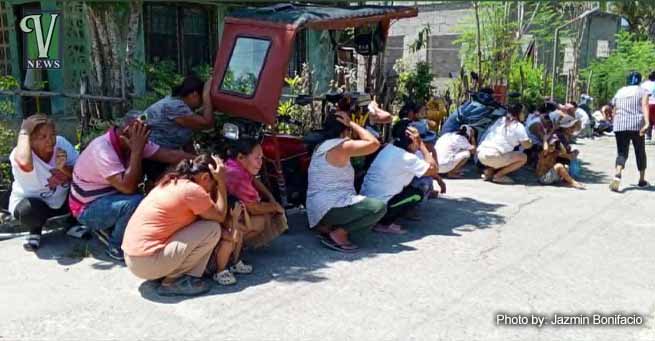
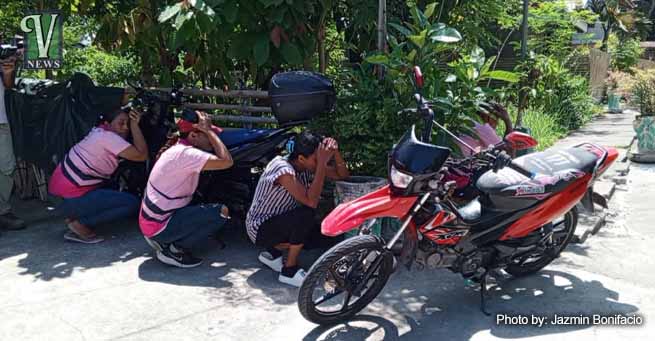
That reality was at the center of a multi-hazard simulation exercise held in the municipality, where responders and residents took part in a carefully planned but realistic emergency scenario: a magnitude 7 earthquake followed by a fire.
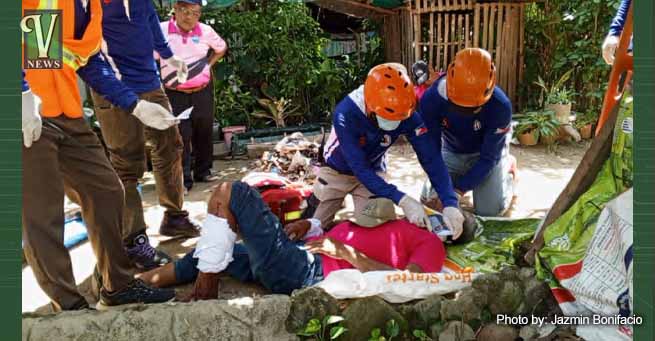
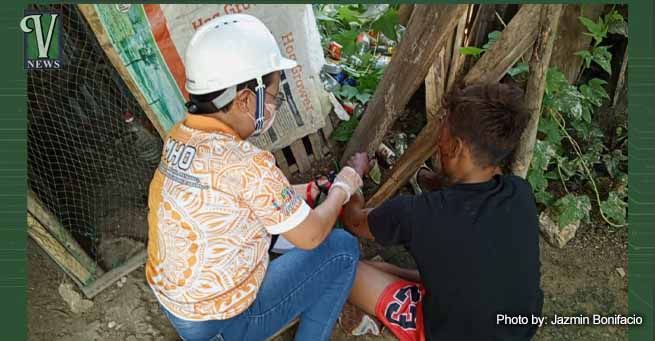
For a few hours, quiet streets turned into scenes of urgency. `Victims’ were pulled from damaged structures. Rescue teams moved quickly with stretchers and radios. Others guided evacuations, checked buildings, and coordinated response efforts as the situation unfolded in real time.
Municipal employees, health workers, disaster officials, rescue teams, and community volunteers all worked side by side. In many cases, people who usually meet in offices or barangay halls found themselves practicing how to respond together under pressure.
Tabango, a coastal municipality in Leyte with communities facing both the sea and inland agricultural areas, sits in a location where multiple hazards can overlap. Heavy rains can isolate barangays. Strong typhoons can damage homes and roads. Earthquakes can affect both coastal and upland areas at the same time.
For many who joined the drill, that combination of risks made the exercise feel very close to reality.
“You don’t really think about how fast things can happen until you’re already in the situation,” said Vanessa Valiente, 26, a resident of Barangay Tugas. “It makes you realize how important it is to know what to do before anything happens.”
Another resident from the same barangay, 30-year-old Diosdasa Valiente, said the experience changed how she views disaster response.
“Dati akala ko basta may sakuna, tulong agad ang kailangan. Pero ngayon, nakita ko na kailangan pala malinaw ang bawat tungkulin para hindi magulo ang response,” she said. “Mas mabilis ang kilos kung alam ng bawat isa ang gagawin.”
For some participants, especially in Barangay Tugas, where many families depend on fishing and coastal livelihoods, the exercise also brought back memories of past storms that damaged homes and disrupted daily life along the shoreline.
“Kapag bagyo, una naming iniisip ang bangka at bahay,” said 63-year-old resident Anastacia Malinao. “Ngayon, mas malinaw na sa amin kung paano mag-evacuate at sino ang lalapitan kung may emergency.”
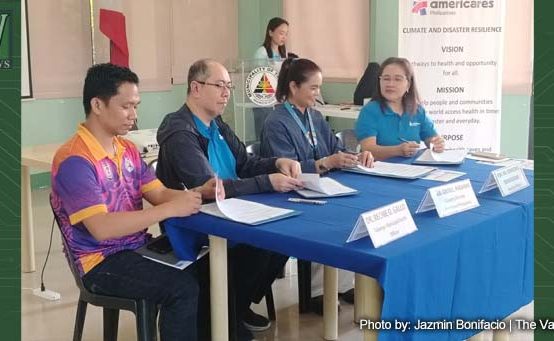
The activity was facilitated by Americares Philippines, which works with communities to strengthen disaster preparedness and response systems. Program Manager Rudelly Cabutin said the goal is not only training, but also helping people understand their roles when emergencies become overwhelming.
“When disasters happen, people don’t have time to figure things out on the spot. They need to already know what to do,” Cabutin said.
One of the most important parts of the exercise was the participation of community volunteers. In real disasters, they are often the first to respond, helping neighbors evacuate, sharing information, and providing assistance long before official rescue teams can reach every area.
In towns like Tabango, where some barangays can become hard to access during heavy rains or road damage, that early response can make a difference in saving lives.
The drill also highlighted something less visible but equally important: communication. Radios, coordination points, and decision-making channels were tested to see how quickly information could move when every second counts.
By the end of the simulation, urgency gave way to reflection. Teams gathered to discuss what went well and what needed improvement. There were moments of success, but also gaps that needed attention—small details that could become critical in a real emergency.
For Tabango, the exercise was not about perfection. It was about practice.
Because in a place where the weather can change quickly and the ground can shake without warning, preparedness is not just a plan written on paper it is something built through experience, repetition, and teamwork.
And while this disaster was only acted out, everyone knew the same thing: the next one would not be.
Photos by: Jazmin Bonifacio


 Disaster Training Reaches Leyte’s Frontline Health Workers
  Dagami police nab alleged drug personality in Bayabas
  Random drug tests eyed for drivers in Eastern Visayas
  90,110 Eastern Visayas children get measles-rubella shots
  50 Motorcyles to Help Eastern Visayas Cops Respond Faster
  Abuyog Police Step Up Security as Town Fiesta Nears