
 Jazmin Bonifacio & Ronnie Yanuario
 Posted on Jan. 25, 2026 at 5:53 pm
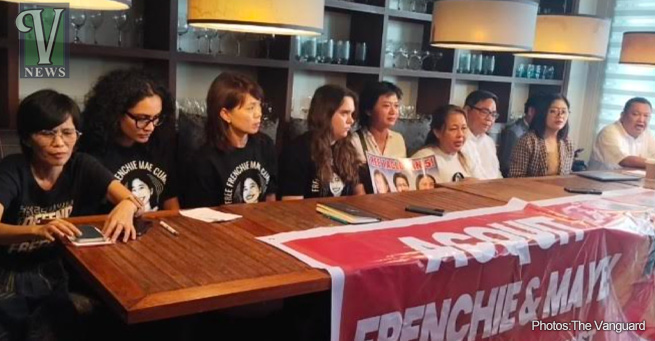
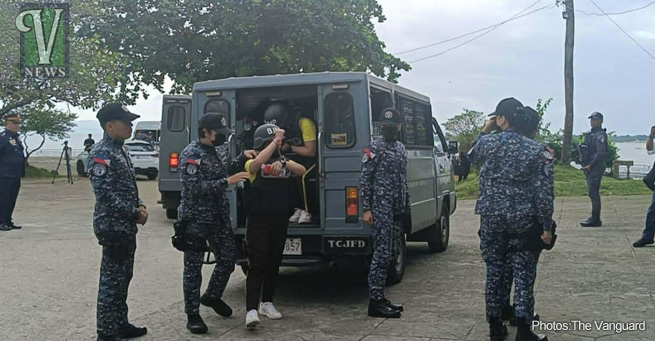
TACLOBAN CITY, Leyte — At dawn on February 7, 2020, armed police and military personnel broke into the office of Eastern Vista, a community newspaper in Tacloban City. By morning, five young human rights activists were taken into custody.
Almost six years have passed since then, and three of the five, reporter Frenchie Mae Cumpio, lay worker Marielle Maye Domequil, and Alexander Abiguana, are still locked up. Cumpio and Domequil have been convicted of terrorism financing, despite the court declaring that the proof used to justify their arrest is no longer valid.
On January 22, 2026, Regional Trial Court (RTC) Branch 45 Judge Georgina Uy Perez found Cumpio, 26, and Domequil, 28, guilty beyond reasonable doubt of violating Section 8(ii) of Republic Act No. 10168, the Terrorism Financing Prevention and Suppression Act of 2012. The court sentenced both women to an indeterminate prison term of 12 years, five months, and 11 days to 18 years, eight months, and one day, and ordered them to pay P 500,000 each in fines.
In a different decision announced the same day, the court freed them from the charge of illegal possession of firearms and explosives, the accusations that allowed the police and military to raid, arrest them, and keep them in custody for nearly six years.
The opposition has once again angered the local and international community and has brought back the old concerns of the Philippines residents and the world about the misuse of terrorism laws against journalists and activists in the country.
𝐀 𝐑𝐚𝐢𝐝 𝐁𝐞𝐟𝐨𝐫𝐞 𝐃𝐚𝐰𝐧
The raid occurred at about 4 a. m. at the office and the staff house of Eastern Vista, an alternative media outlet publishing reports on land conflicts, militarization, and human rights violations in Eastern Visayas.
Cumpio was only 21, and Domequil was 22.
The police stated that they found a pistol, a fragmentation grenade, and P 557, 360 in cash. The defense team, from the very start, kept on saying that the police planted those items.
Cumpio revealed in court that she was taken out of her room while the search was going on and brought to the kitchen even though she was still in her sleeping clothes. When the officers brought her back to the bedroom almost 20 minutes later, a gun was already there.
Eventually, the court decided that the prosecution had not proven beyond reasonable doubt that the guns and explosives were illegally possessed. However, it did not address the issue of whether the raid was lawful or if the police planted the evidence.
The acquittal raises one question that still remains:
If the weapons were not there as far as the law was concerned, then on what grounds were the raid, arrest, and the subsequent years of imprisonment justified?
As the firearms case failed, prosecutors pursued a different case.
In March 2021, while Cumpio and Domequil were already in jail, authorities filed a terrorism financing complaint, accusing them of providing money, ammunition, and clothing to the Communist Party of the Philippines–New People’s Army (CPP-NPA).
The case relied mainly on statements from former rebels who now work with the military, and who claimed the two women gave money during a CPP-NPA anniversary event on March 29, 2019, in Catbalogan City, Samar.
Both women denied the claim. Cumpio and Domequil said they were in Tacloban City, reporting the harassment of evacuees from San Jose de Buan. While, Domequil shared she was at the Makabayan office along Kalipayan Road, also in Tacloban. They submitted social media posts and emails from that day as evidence.
However, the court did not accept their defense. The court said that web activity alone is not enough to definitively prove a person’s whereabouts, since she noted that there is also internet access in Catbalogan. Neither party produced digital forensic evidence.
Proof beyond a reasonable doubt does not mean absolute certainty, stated the decision.
What is essentially required is the moral certainty of the guilt of the accused.
Human rights lawyers caution that such reasoning dangerously lowers the level of proof required in terrorism cases, thus enabling intelligence testimony to override material evidence.
𝐖𝐡𝐞𝐧 𝐉𝐚𝐢𝐥 𝐓𝐢𝐦𝐞 𝐂𝐨𝐦𝐞𝐬 𝐁𝐞𝐟𝐨𝐫𝐞 𝐂𝐨𝐧𝐯𝐢𝐜𝐭𝐢𝐨𝐧
As the terror financing case continued, Cumpio’s other cases were dismissed.
The court dropped the murder and attempted murder cases after noting that the complaint named a different person, Frenchie Armando Cupio.
In October 2025, the Court of Appeals reversed the decision of the Anti-Money Laundering Council, ruling that the confiscated amount of 557, 360 was not related to terrorism, and that the freezing of the bank accounts was unauthorized.
Even though the courts repeatedly identified procedural flaws, the detention persisted.
Only in 2024, close to five years after her arrest, did Cumpio get the chance to take the stand in her defense. Her lawyers called this delay a breach of due process.
For those who question the authorities, the sequence is very clear: first the punishment and then the proof.
𝐓𝐡𝐞 𝐎𝐭𝐡𝐞𝐫 𝐓𝐡𝐫𝐞𝐞 𝐨𝐟 𝐭𝐡𝐞 𝐓𝐚𝐜𝐥𝐨𝐛𝐚𝐧 𝟓
The uneven results obtained by the rest of the group serve as an additional indication of the inconsistencies in the prosecution of the case.
Thus, Mira Legion and Marissa Cabaljao were eventually released on bail.
Alexander Philip Abinguna is still in detention, with his case hanging for four years.
None of the three was found guilty of terrorism financing.
They were all caught in the same operation. They all were charged with the same weapons issues. Only two of them were convicted under the terrorism laws.
Defense lawyers argue that selective prosecution is a result of one single police operation.
𝐖𝐡𝐨 𝐓𝐡𝐞𝐲 𝐀𝐫𝐞 𝐚𝐧𝐝 𝐖𝐡𝐲 𝐓𝐡𝐞𝐲 𝐖𝐞𝐫𝐞 𝐓𝐚𝐫𝐠𝐞𝐭𝐞𝐝
Cumpio was the executive director of Eastern Vista, a local human rights organization that had been exposing incidents of killing of farmers, land grabbing, militarization, and human rights violations in Samar and Leyte.
Domequil, as a lay worker with the Rural Missionaries of the Philippines Eastern Visayas, supported farmers and peasant communities in their struggle for rights.
Both were part of Stand with Samar and Leyte, a humanitarian network aiding disadvantaged communities.
Human Rights groups believe their work led to their red-tagging, a baseless practice labeling journalists and civil society workers as communist supporters.
𝐂𝐚𝐧 𝐓𝐡𝐞𝐲 𝐏𝐨𝐬𝐭 𝐁𝐚𝐢𝐥 𝐀𝐟𝐭𝐞𝐫 𝐂𝐨𝐧𝐯𝐢𝐜𝐭𝐢𝐨𝐧?
Despite the harsh sentences, Cumpio and Domequil may still be eligible for bail.
Their lawyer, Julianna Agpalo, noted their intention to file a motion for bail pending appeal within five days of the verdict.
Agpalo clarified that bail is at the court’s discretion, as the law allows it for the sentenced term under the Indeterminate Sentence Law.
She highlighted the confusion caused by combining terrorism financing with firearms charges, which was resolved only after the acquittal.
Agpalo expressed shock at the conviction, revealing the growing misuse of terror laws to silence dissent, particularly community journalists.
𝐄𝐧𝐝𝐮𝐫𝐢𝐧𝐠 𝐀𝐠𝐨𝐧𝐲: 𝐅𝐚𝐦𝐢𝐥𝐢𝐞𝐬 𝐓𝐨𝐫𝐧 𝐀𝐩𝐚𝐫𝐭 𝐛𝐲 𝐏𝐫𝐨𝐥𝐨𝐧𝐠𝐞𝐝 𝐃𝐞𝐭𝐞𝐧𝐭𝐢𝐨𝐧
Kyle Domequil, Marielle’s sister and a spokesperson for the Free Tacloban 5 Network, described the ordeal as traumatic, affecting their mental health.
The family faced harassment and red-tagging, even through manipulated family photos, before expressing outrage at the decision.
On January 23, 2026, which was Cumpio’s birthday, supporters brought cupcakes, books, and notebooks to the Tacloban City jail — small gestures marking years spent behind bars.
𝐂𝐡𝐢𝐥𝐥𝐢𝐧𝐠 𝐌𝐞𝐬𝐬𝐚𝐠𝐞
Beh Lih Yi, the Asia-Pacific Director for the Committee to Protect Journalists, demanded Cumpio’s immediate release, criticizing the verdict as an affront to press freedom.
Aleksandra Bielakowska of Reporters Without Borders warned of global implications, calling the verdict a dangerous message to journalists worldwide.
UN Special Rapporteur Irene Khan described Cumpio’s story as a ` travesty of justice’, questioning the fairness of Cumpio’s trial.
Len Olea, Secretary General of the National Union of Journalists, said, “Reporting on human rights is being equated to committing a crime. “
Karapatan Secretary General Cristina said, “Terrorism laws are being employed to stifle the voices of dissent. “
For press freedom advocates, the Tacloban 5 case is no longer just about two women. It is about how terrorism laws can sustain imprisonment even when the evidence collapses.
As of February 2025, the Free Tacloban 5 Network says there are 761 political prisoners under the current administration.
𝐀𝐧 𝐄𝐧𝐝𝐢𝐧𝐠 𝐖𝐢𝐭𝐡𝐨𝐮𝐭 𝐂𝐥𝐨𝐬𝐮𝐫𝐞
It has been six years since police and military raided a newsroom at dawn, yet the case of the Tacloban 5 remains unresolved.
The court said there was no evidence of the weapons used to justify the raid. Still, two of the women arrested that morning were sentenced to more than ten years in prison for terrorism financing. The money allegedly used for terrorism has been returned, murder charges were dropped, and misidentifications admitted—but they remain in jail.
No police officer has been held responsible for the failed weapons case. No prosecutor has been held accountable for the dropped charges. No intelligence officer has explained the change from testimony to physical evidence. While the system moves on, the victims’ lives remain broken.
For Frenchie Mae Cumpio and Marielle Domequil, it was not just a question of guilt or innocence. Years of their youth, careers, and family life have been lost before any final judgment. Their case raises a worrying question: in the Philippines, has detention itself become the punishment?
As their lawyers prepare appeals and motions for bail, the bigger issue remains: if journalism, humanitarian work, and advocacy can be labeled terrorism based on intelligence claims alone, the threat extends far beyond activists and reporters—it could affect anyone who exposes power.
The Tacloban 5 case is more than a legal decision. It is a warning: the line between crime and conscience can be dangerously blurred, and the cost is measured in stolen years and fractured lives.
(Photos by The Vanguard)


 IMNet helps Tacloban journalists prepare for risks in the field
  DPWH to Push Through with P4.77B Tacloban Causeway Project Despite Contract Terminations
  2 Suspected Drug Personalities Nabbed in Tacloban Buy-Bust
  EVMC spends P1.08B for Zero Balance Billing
  Leyte Farmers Bring a Forest Back
  P6.9B Project to Help Eastern Visayas Communities Prepare for Disasters