
 Gina Dean
 Posted on Feb. 3, 2026 at 3:37 pm

In a region where infrastructure failure has become a multi-billion peso paradox, the latest pronouncements from the DPWH signal more than just a repair schedule; they represent a fundamental change in the rules of engagement.
For years, the people of Samar and Leyte have watched billions of pesos vanish into the cracks of the Maharlika Highway, only to be met with worsening conditions and “perpetual repairs.” Secretary Vince Dizon’s admission that these historical investments are “hard to reconcile” with the current state of decay is a long-overdue validation of the local plight.
Prompted by the sobering reports from Samar’s bishops and local leaders, the government is finally admitting that the “Samar-Leyte Paradox” cannot be solved with the same fragmented, small-scale approach that caused it. Accountability is no longer a future promise—it is the prerequisite for the massive ₱16-billion rehabilitation set to commence this 2026.
The defining shift in this strategy is the move toward Quadruple A (AAAA) contractors. By meeting with the elite tier of builders—firms typically reserved for the sophisticated urban developments of SM, Ayala, and Megaworld—Dizon is effectively professionalizing the Maharlika lifeline. For too long, the highway was carved up into small, poorly monitored contracts that favored political expediency over engineering excellence.
Bringing in these industry giants is a move to ensure that every peso spent is backed by the same structural guarantees found in the nation’s most prestigious private projects. It is a “Fix Now, Audit Later” race where the immediate focus is restoring connectivity through top-tier expertise, while a forensic audit simultaneously traces the paper trail of past failures to ensure that those who profited from negligence are held to account.
However, the road itself is only as reliable as the bridges that carry it. Secretary Dizon has correctly identified that Region 8 is a “special case” precisely because its bridges—the very bones of the highway—are 40 to 50 years old.
Patching asphalt on a crumbling bridge is an exercise in futility. This is why the San Juanico and Calbiga bridges have become national priorities; they are the literal valves of the Philippine supply chain. The urgency to restore the San Juanico Bridge to its full 33-ton capacity by mid-2026 is not just about convenience—it is a vital anti-inflationary measure for a region where transport costs dictate the price of food.
By treating the Maharlika Highway as a unified national asset rather than a series of local projects, the government is finally building a foundation where accountability and progress can actually coexist.


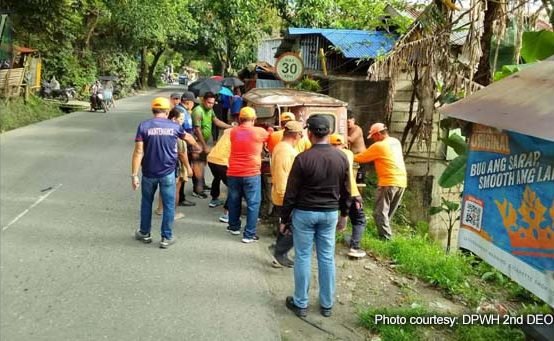 Catbalogan City Gears Up for Holy Week with Road Clearing, Traffic Measures
 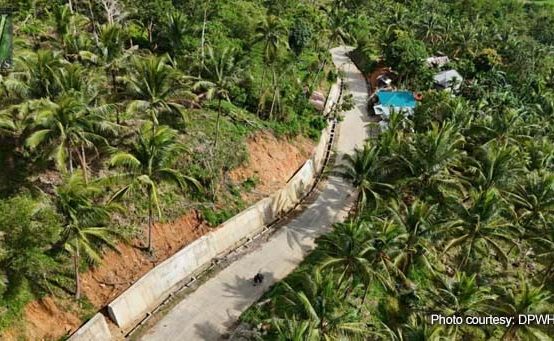 Biliran DPWH Builds Drainage, Landslide Wall for Caucab-Almeria Road
 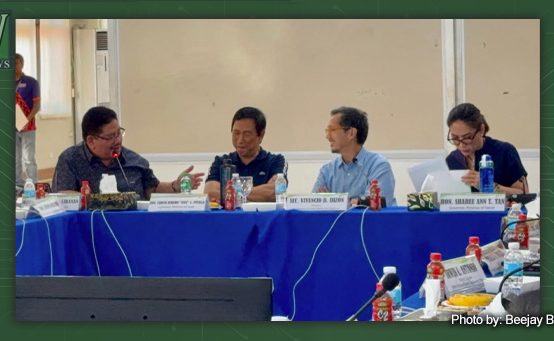 DPWH Pushes Key Road, Bridge Projects in Samar Provinces
  DPWH Sec. Vince Dizon Clarifies Continued Major Rehabilitation of Maharlika Highway Amid Price Adjustments
 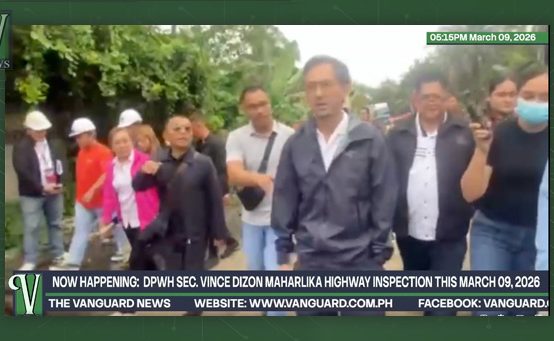 Maharlika Highway Rehabilitation in Samar: Long Overdue Progress Amid Political Questions
 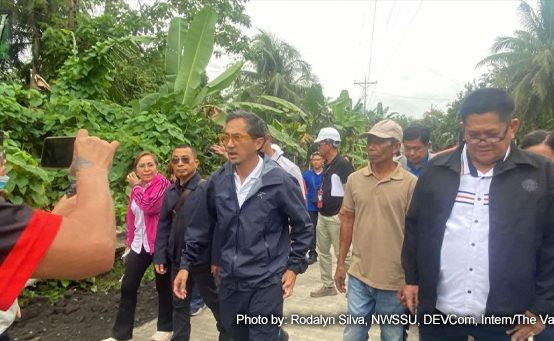 DPWH Chief Inspects Damaged Maharlika Highway in Samar, Orders Urgent Repairs