
 Jazmin Bonifacio
 Posted on July 14, 2026 at 4:41 am

TACLOBAN CITY — The fight against illegal drugs in Eastern Visayas is becoming more difficult as some drug transactions move from face-to-face exchanges to online platforms.
The Philippine Drug Enforcement Agency in Eastern Visayas said some individuals involved in the illegal drug trade are now using digital wallets, online banking, and private online communication instead of meeting personally.
PDEA Eastern Visayas Regional Director Levi Ortiz said the traditional “kaliwaan,” or direct exchange between buyers and sellers, is becoming harder to monitor because transactions can now happen through mobile phones and online applications.
“The new modus now is using online GCash through banking, which is really hard,” Ortiz said.
Unlike previous drug deals where suspects had to meet in person, online transactions allow buyers and sellers to communicate and transfer money without being physically together. For investigators, this means gathering evidence now requires tracking digital information and understanding how online transactions are carried out.
Large Drug Seizure Shows Supply Remains a Concern
While some drug activities have moved online, authorities continue to intercept large shipments of illegal drugs through traditional operations.
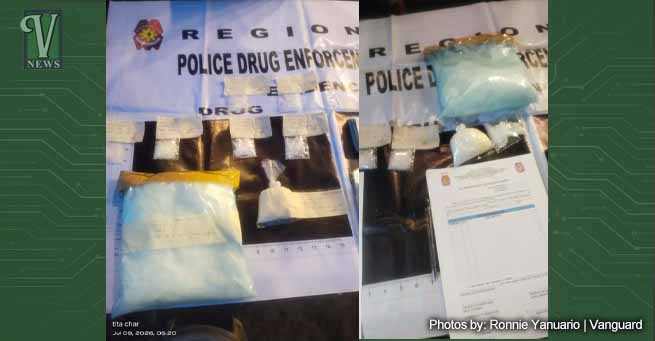
In July 2026, authorities seized nearly P7 million worth of suspected shabu during an anti-drug operation in Ormoc City, Leyte.
The operation on July 9, 2026, in Barangay South, Ormoc City resulted in the recovery of about 1,029 grams of suspected shabu, with an estimated value of P6,997,200, according to authorities.
The seizure showed that while drug transactions may be changing, the movement of illegal drugs through physical networks remains a concern for law enforcement.
PDEA Trains Personnel for Online Cases
Ortiz said PDEA is training its agents in digital investigation and forensic techniques to help them handle cases involving online drug activities.
He said investigators need to learn how to identify online transactions, collect electronic evidence, and prepare cases involving digital communication.
“We are equipping our workers, our agents, and our operatives so they know how to address these challenges,” Ortiz said.
He added that law enforcement must continue improving its skills as drug groups find new ways to operate.
A Region With Wide Coastlines and Many Entry Points
Monitoring illegal drug activities is also challenging in Eastern Visayas because of the region’s geography.
Eastern Visayas is composed of six provinces: Leyte, Southern Leyte, Biliran, Samar, Eastern Samar, and Northern Samar, and has more than 4.5 million residents.
The region covers the islands of Leyte, Samar, and Biliran, with communities located along coastlines, mountainous areas, and smaller island municipalities.
Its location between Luzon and Mindanao makes it an important route for transportation and trade. However, its many ports and coastal areas also make it difficult for authorities to monitor every possible entry point.
Ortiz said illegal drugs may pass through different routes before reaching communities in Eastern Visayas.
Southern Leyte has several public ports, while other private ports across the region also require monitoring, according to PDEA.
Targeting Drug Personalities and Drug Dens
Despite the rise of online transactions, Ortiz said PDEA continues operations against high-value targets and drug dens.
He said government employees involved in illegal drug activities are treated as high-value targets because they are expected to follow the law and protect public trust.
“You are working for the government, and you are being paid by the government to do what is right, and then you use drugs? So automatic high-value target ka talaga,” Ortiz said.
PDEA also continues to dismantle drug dens, which Ortiz said contribute to problems affecting families and communities.
Need for Cooperation Across the Region
Ortiz said PDEA cannot monitor the entire region alone because of its size and geography.
The agency continues to work with the Philippine National Police Maritime Group, Philippine Coast Guard, and the Maritime Industry Authority MARINA to monitor ports and possible routes used for illegal activities.
PDEA also uses narcotics detection dogs during inspections at ports and checkpoints and coordinates with airport authorities to improve security measures.
Aside from enforcement, Ortiz said prevention remains important. He pointed to community programs that involve parents and young people in discussions about the dangers of illegal drugs.
As drug transactions become more difficult to see, authorities face the challenge of responding to activities that can happen both in communities and online.
For Eastern Visayas, the fight against illegal drugs now requires stronger investigation skills, closer coordination among agencies, and continued support from communities.
Photos by: Ronnie Yanuario | Vanguard


 Leyte Communities Trained to Turn Abaca Into School Bags
  Napolcom Urges Stronger School-Community Ties After San Jose Shooting
  NBI Raids Illegal Gambling Operations Using Allegedly Cloned PCSO POS Machines
  PNP Reassigns Capoy; Cardiño to Head Eastern Visayas Police
  Eastern Visayas braces for barangay, SK polls as Senate weighs 5-year terms
  From Selling Vegetables to Growing Them