
 Beejay Balagbis
 Posted on July 15, 2026 at 7:42 am

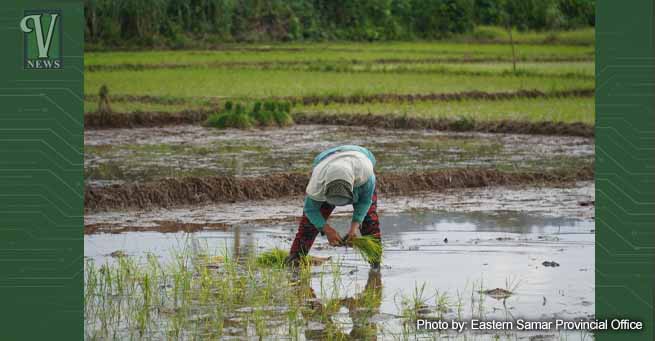
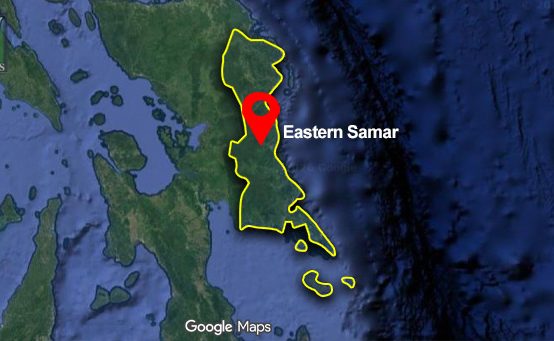
DOLORES, Eastern Samar – July 15, 2026 – The morning sun spills over the endless green plains of Brgy. Gap-ang and Brgy. Jicontol, turning each rice stalk into a golden spear pointing toward the sky. Here, in the heart of what is known as Eastern Samar’s Rice Granary, 62-year-old Mang Dencio bends low to run his fingers through the leaves of his crop—a variety he once thought he could never afford to grow, now thriving under his care.
“Before, I’d be lucky if I harvested 30 sacks from a hectare,” he says, his voice thick with emotion as he stands in a field that stretches as far as the eye can see. “This year, with what we’ve learned from the Rice Derby, I’m looking at 60 sacks or more. My children won’t have to leave home to find work anymore. This land—it’s giving us back what we’ve given it all these years.”
On this day, the Department of Agriculture Regional Field Office 8 (DA-RFO 8) brings Season 5 of the Rice Derby 2026 to Dolores, a program that is transforming not just harvests but the very lives of farmers across Eastern Samar. According to provincial agricultural data, rice production accounts for 68% of the province’s total agricultural output, with Dolores contributing 42% of that volume—numbers that make the town the backbone of Eastern Samar’s food security. Yet for decades, low yields, outdated farming methods, and limited access to technology kept even the most hardworking farmers trapped in a cycle of just getting by.
The Rice Derby was born to break that cycle. Launched during the dry season cropping period this May—set to run through October—the initiative showcases modern farming technologies and innovative rice cultivation practices, giving farmers hands-on access to tools and techniques they could only read about before. It is a partnership forged between DA-RFO 8, the provincial government led by Gov. RV Evardone, and the local government of Dolores under Mayor Zaldy Carpeso—a collaboration that puts farmers at the center of progress.
At the field day event, farmers gather around demonstration plots where high-yielding rice varieties grow alongside traditional strains, their differences stark and undeniable. Agricultural technicians from the Office of the Provincial Agricultural Services walk them through precision farming methods, proper water management, and organic pest control—skills that are already changing the game for families like Mang Dencio’s.
“I used to spend half my income on chemical fertilizers that sometimes did more harm than good,” shares 38-year-old Nanay Linda, a mother of four who farms a two-hectare plot with her husband. “The Rice Derby taught us how to make our own compost from crop waste and animal manure. Not only is it cheaper—my rice tastes better, and buyers are willing to pay more for it.”
The numbers tell a story of transformation. DA-RFO 8 data shows that in the first four seasons of the Rice Derby, participating farmers in Eastern Samar increased their average yield by 73%—from 2.8 metric tons per hectare to 4.8 metric tons. In Dolores alone, the program has already benefited 1,200 small-scale farmers, with plans to expand to 2,500 by the end of the year. These gains translate to more food on tables, more money in savings, and more children staying in school.
Mayor Carpeso, who grew up in a farming family in Brgy. Jicontol knows firsthand the struggles his constituents face. “Dolores has always been called the Rice Granary, but for too long, our farmers were the ones going hungry,” he says, addressing the crowd gathered for the field day. “This program isn’t just about growing more rice—it’s about growing more opportunities. It’s about making sure that the hands that feed our province are also the hands that build our future.”
Gov. Evardone, who traveled from Borongan City to join the event, emphasizes that Eastern Samar’s agricultural renaissance is a model for other provinces to follow. “We have 52,000 hectares of agricultural land across the province, with 31,000 dedicated to rice,” he notes. “By investing in our farmers—not just with seeds and fertilizers, but with knowledge and support—we are turning potential into prosperity. If we can do it here, in one of the country’s poorest provinces, any province can.”
As the sun climbs higher, Mang Dencio walks back to his own field, carrying a handful of new rice seeds he received at the event. His grandson, 10-year-old Kiko, runs ahead of him, already talking about how he wants to study agriculture so he can help his lolo make their farm even better. For the first time in generations, the future of farming in Dolores looks as bright as the golden grain swaying in the breeze.
“We used to plant rice just to survive,” Mang Dencio says, watching his grandson chase butterflies through the stalks. “Now, we plant it to thrive. And that—that’s a gift we can pass down to every generation that comes after us.”
In the rice fields of Dolores, where the earth has been tilled with hope and watered with hard work, Eastern Samar is proving that agriculture is more than just a sector—it is the foundation of a province’s rise.
Photo by: Eastern Samar Provincial Office


 Public Pulse: Plea or Process? A Fair Look at the BBM Program Concerns
  Road projects to make travel easier, livelihoods better in Maslog
  Biliran’s Farmers Are Still Waiting for Water Despite a 100% Irrigation Claim
  Can-avid LGU Distributes 10Kg Rice Aid to 5,000 Families
  Borongan’s Insurgency-Free Status Boosts Hopes for Eastern Samar Tourism
  DENR Launches Mobile Permitting Services in Guiuan