
 Jazmin Bonifacio
 Posted on September 1, 2026 at 6:06 pm

Tacloban City — For the fishermen who depend on Cancabato Bay for their livelihood, the proposed continuation of the city’s multibillion-peso causeway project is more than an infrastructure issue.
It is a question of whether the bay they have depended on for generations will still be alive in the years to come.
A possible court battle is now looming over the project as local fishermen, environmental advocates and lawyers consider seeking a Writ of Kalikasan to halt construction and compel government agencies to account for the project’s environmental and regulatory compliance.
At the center of the push is Tacloban City Agriculture Chief Romelo Anade, who said he is working with lawyers from the Environmental Legal Assistance Center on a possible petition.
The move, he stressed, is not an attempt to oppose development.
It is an attempt to protect the bay.
“If we will be killing Cancabato, we are killing Tacloban,” Anade said.
We need development but not at this cost
Anade said he has attended several meetings with the Department of Public Works and Highways (DPWH) and other government agencies to raise questions about the causeway and request documents needed to assess its potential effects on Cancabato Bay.
One document he has repeatedly sought is the Environmental Impact Assessment (EIA), which should provide information on the project’s possible environmental consequences and the measures intended to prevent or minimize damage.
Anade said a DPWH official once told him that the EIA file would be sent to him by email.
He said he never received it.
“I’ve been checking my email, but nothing has come yet, and it’s been a year already,” Anade said.
Despite repeatedly raising questions, Anade said he eventually stopped receiving invitations to some meetings.
He said he could not determine why the invitations stopped but noted that he had consistently pressed for documents, explanations and assurances regarding the project.
For Anade, those questions are part of his responsibility as a city agriculture official, particularly because the project is located in an area that supports fishing and other marine activities.
Questions over permits and clearances
Anade is also questioning why construction was allowed to proceed without a Certificate of No Objection from the City Agriculture Office.
He said he was told that the project secured clearance from the national government’s central office because it is a national government project.
But for Anade, the explanation does not resolve the city’s concerns.
He is also seeking clarification on the project’s Environmental Compliance Certificate (ECC) and other local resolutions and requirements.
His position is straightforward: environmental and regulatory requirements should be clear and settled before construction moves forward.
The concern is heightened by the location of the project.
Cancabato Bay has been identified as a Mariculture Zone and Marine Protected Area, placing greater importance on how construction could affect its waters, marine habitats and the communities that depend on them.
A project repeatedly delayed
The causeway has already been delayed and redesigned amid concerns over its potential environmental effects.
Construction was halted in May 2023 after the Tacloban City Council raised questions about the project’s impact on the bay.
Work later resumed following design changes, including the expansion of the bridge portion from 180 meters to 360 meters and the addition of culverts intended to allow water to pass through the embankment.
But the project later stalled again.
As of 2026, the remaining work was reportedly being prepared for rebidding while regulatory clearances were being processed.
The project had reached only 29.13 percent completion as of August 31, 2025.
A P4.48-billion shortcut and a bay at risk
The approximately 2.55-kilometer, four-lane causeway is designed to provide another route between downtown Tacloban and the Daniel Z. Romualdez Airport.
Its promise is significant: reducing travel time between the two areas from roughly 45 minutes to about 10 minutes.
But the price tag has also grown.
The project cost has increased from about P3.46 billion to P4.48 billion.
The planned structure includes a bridge, bike lanes, sidewalks, drainage facilities and wave deflectors.
For supporters of infrastructure development, the project promises faster travel and improved connectivity.
For fishermen, however, the question is what happens to the waters beneath and around it.
The water has changed
Roque Regis, president of the Paraiso Mangrove Park in San Jose, said he is worried about what construction may be doing to the bay’s water quality and marine life.
Regis said the waters near the construction area have become muddy after soil from the mountains was placed in the bay.
The problem becomes more noticeable after heavy rain, when runoff can carry soil and sediment into coastal waters.
As suspended particles increase, the normally clearer water can become brownish or gray-brown.
For people living and fishing around the bay, the change is not merely something they see.
It is something they experience.
Muddy water can indicate increased turbidity, while sediments settling on the seabed can contribute to siltation, the gradual accumulation of soil and other particles in the bay.
Regis said fishermen have also noticed a decline in their catch.
He fears that changes in water circulation and water quality could affect fish, mangroves and other marine resources not only around the construction site but also in nearby coastal areas connected to Cancabato Bay.
A threat beneath the surface
Anade’s concerns extend beyond muddy water.
He is particularly worried about the possible effects of sediment on seagrass beds, which provide habitat and nursery areas for marine organisms.
When fine sediment remains suspended in the water, it can reduce the amount of sunlight reaching the seafloor. When that sediment eventually settles, it can accumulate on the bottom and potentially cover or smother portions of seagrass and other habitats.
For Anade, the consequences could eventually reach the fishing boats.
He also cited the blue swimming crab, a species that depends on coastal waters during parts of its life cycle.
If marine habitats deteriorate, he said, fishermen could ultimately pay the price through declining catches and lost income.
Regis echoed the concern, saying the potential effects on fish, mangroves and other marine resources should be thoroughly examined before the project proceeds further.
`This is not just yours. This is ours.’
For the fishermen, the issue is bigger than muddy water during construction or after a heavy downpour.
They want to know whether changes to sediment movement, water circulation and the physical environment of the bay could become permanent.
The causeway’s embankment and other structures could alter how water moves through parts of Cancabato Bay.
The longer bridge section and culverts were incorporated into the design to allow water to pass through, but Anade and local fishermen want the government to demonstrate that these measures are enough to prevent harmful changes in circulation and sediment accumulation.
They are also calling for closer examination of areas where sediment could settle, particularly around seagrass beds, mangroves and fishing grounds.
The demand is not necessarily to stop development.
It is to ensure that development does not destroy the natural resources that make life in the city possible.
Tacloban needs roads, bridges and better connectivity, Anade said. But the city also needs the bay.
And for the communities whose livelihoods depend on Cancabato, losing the bay would mean losing far more than a body of water.
“This is not just yours, this is ours,” Anade said.
The possible Writ of Kalikasan would ask the courts to examine the project’s environmental and regulatory compliance while the remaining work on the causeway is being pursued.
For Anade, the fight is ultimately about what kind of development Tacloban wants.
A faster route to the airport may take only minutes off a journey.
But if the price is a damaged bay, he warns, the cost could be measured not in minutes but in livelihoods, marine life and the future of Tacloban itself.
“If we will be killing Cancabato, we are killing Tacloban,” Anade said.
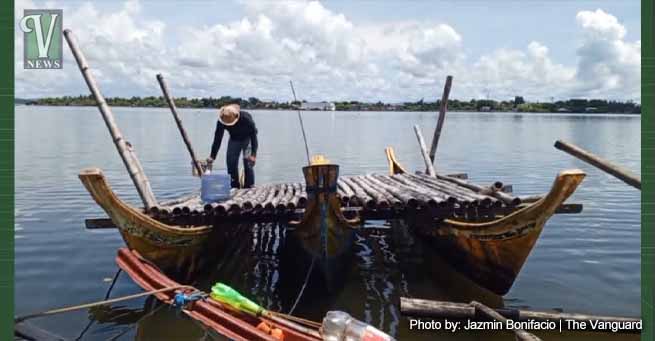
A fisherman heads out into Cancabato Bay to catch fish for his family’s daily needs. (Photo by: Jazmin Bonifacio | The Vanguard)
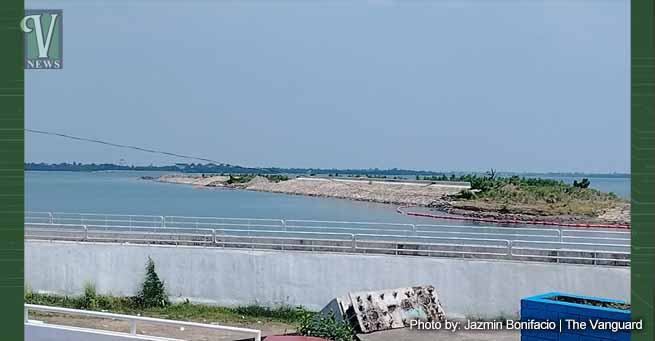
The approximately 2.55 kilometer, four lane Cancabato Bay Causeway is built across Cancabato Bay, stretching over the waters toward the Daniel Z. Romualdez Airport. (Photo by: Jazmin Bonifacio | The Vanguard)


 From Selling Vegetables to Growing Them
  Fake bomb, shooting threats disrupt classes in Eastern Visayas
  Behind the Walls: How DSWD Helps Children in Conflict with the Law Start Again
  EDC to Triple Leyte Geothermal Capacity by 2030
  PCCI Eastern Visayas Calls for Stronger School Safety Rules After Tacloban Shooting
  The Extra Liter Paglaum Pupils Had to Carry