
 Jazmin Bonifacio
 Posted on June 15, 2026 at 6:07 am

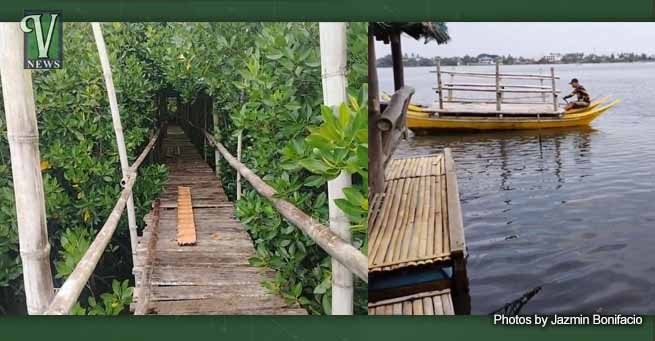
SAN JOSE, Tacloban City — Most mornings, Roque Regis can be found at the Paraiso Mangrove Eco-Park in San Jose, Tacloban City.
At his age, he could be spending more time at home with his family or out fishiaxng. Instead, he joins six other volunteers in looking after a mangrove forest they have spent years building and protecting.
Nobody pays them for it.
Some days they clear overgrown paths. Other days they repair signboards, check on mangrove seedlings, or guide students visiting the park. The work is not as easy as it used to be.
Most of the volunteers are already senior citizens.
Still, they keep showing up.
That is why it pains Regis when people question the work they have devoted much of their lives to.
“We planted these mangroves for the community,” he said. “We never expected to become rich from this. We only wanted to help protect the environment.”
The mangrove park was not always what it is today.
Years ago, the area was mostly mud and open shoreline. Regis and other volunteers spent countless days planting seedlings one by one, often under the sun and with very little help.
Over time, the mangroves grew.
Today, the six-hectare forest attracts students, researchers, environmental groups, and visitors who want to learn more about mangroves and climate change. For many students, the park has become a place to gather information for research papers and thesis projects.
The volunteers who helped build the place are still there.
But only seven remain active.
“We are already old,” Regis said with a laugh. “Most people our age are resting. But we are still here.”
For years, the group has welcomed visitors from different schools and universities. Students from the University of the Philippines and other colleges have visited the eco-park to conduct research and environmental activities.
But Regis, the president of Paraiso Mangrove Eco Park believes those visits have sometimes led people to misunderstand the organization.
“Sometimes when UP students come here, some people immediately think they are activists,” he said. “But they are students. They come here because they are studying the environment.”
The park has also received visits from politicians over the years, including opposition candidates during election campaigns.
Regis said the group has never endorsed candidates or taken sides in politics.
“We don’t ask visitors who they support,” he said. “Anybody who wants to learn about the mangroves is welcome.”
Still, he believes some people have used those visits to paint the organization as political.
“Just because a politician visits the park doesn’t mean we support that person,” he said.
Those assumptions, according to the volunteers, have led to years of suspicion.
Some members say they have heard accusations linking the group to anti-government activities. Others have grown uneasy when unfamiliar people show up during activities and take photographs.
For the elderly women in the organization, the experience can be intimidating.
“Some of them are grandmothers already,” Regis said. “They only want to help take care of the mangroves. When they feel they are being watched, they get scared.”
Regis said he understands that military intelligence has a job to do.
But he still struggles to understand why volunteers caring for a mangrove forest have become subjects of suspicion.
“I respect their work,” he said. “But sometimes I ask myself, what have we done wrong?”
The concern has become serious enough that the organization now informs local officials whenever activities are scheduled at the park.
Whether it is a study tour, tree-planting activity, or seminar, letters are sent ahead of time.
“I don’t want our members to worry,” Regis said. “I want them to feel safe.”
The challenges do not stop there.
As the volunteers grow older, maintaining the eco-park has become harder. Their numbers have dwindled, and support has been limited. Yet they continue because they believe the mangroves matter.
Many of them remember what happened during Super Typhoon Yolanda. They know how important natural barriers can be for coastal communities.
“We are not asking for money,” Regis said. “We just want people to understand why this work is important.”
He looked toward the mangroves swaying in the afternoon breeze.
Many of those trees were planted by the same hands that continue to care for them today.
After years of volunteer work, what disappoints him most is not the lack of recognition.
It is the feeling that the people protecting the mangroves are the ones being questioned.
“If all we have done is protect the environment,” Regis said, “why are we being treated as a threat?”
Photo by: Jazmin Bonifacio


 Historic Leap for Eastern Samar: Medical College Opens as Province Unveils ₱500m Hospital Rehab
  House Approves Bill for New State-Run Medical College in Eastern Samar
  Bill Filed to Establish Maritime College in Eastern Samar
  Local and Overseas Jobs Highlighted as 105 Get Hired at Tacloban Fair
  ESSU Graduate Achieves Top 9 in February 2026 Nurses Licensure Exam with 100% Passing Rate in Main Campus
  ESSU-Can-avid Campus Successfully Conducts Internal Quality Audit, Reinforcing Commitment to Excellence