
 Gina Dean
 Posted on June 23, 2026 at 8:33 am

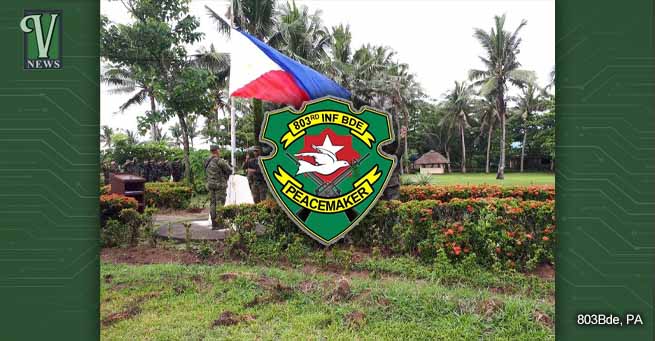
MATUGUINAO, Samar — Armed insurgent strength across Samar Island has dropped by more than half over a multi-year period, according to military officials.
Figures released by 803rd Infantry Brigade Commander, BGen Carmelito Pangatungan, on June 8, 2026, reveal that active combatant numbers have plummeted from an average of 180 fighters in 2020 down to an estimated 60 to 70 remaining personnel.
Despite this significant reduction, BGen Pangatungan confirmed that standard infiltration persists across highly restricted geographic pockets. The remaining insurgent presence is currently constricted to remote, mountainous boundary regions, specifically spanning the rugged terrains of Las Navas, Catubig, and Silvino Lobos, as well as the far-flung “Iraya” mountainous sectors dividing Jipapad and the Pacific towns of Samar.
The brigade commander noted that isolated barangays completely lacking access roads and basic government services remain highly vulnerable to ongoing agitation propaganda.
Local leaders have publicly identified systemic gaps in localized education as the primary psychological vulnerability allowing insurgent elements to maintain their operational footprint within these specific geographic pockets.
While neighboring municipalities like Matuguinao have successfully achieved a status of stable internal peace and security, forward-deployed military forces maintain active legal blockades at municipal borders to prevent the re-entry of insurgent cells from contiguous conflict zones like Las Navas.
In response to the domestic displacement caused by active operations, BGen Pangatungan outlined a coordinated emergency framework that strictly divides field responsibilities between combat forces and civilian leaders.
Under these guidelines, the Local Government Unit (LGU) serves as the primary entity responsible for the immediate placement, logistics, and direct welfare assistance for civilians.
Local government personnel handle the administrative, physical, and financial relocation of families forced to flee their homes, while the Armed Forces of the Philippines (AFP) operate in a secondary capacity strictly limited to providing tactical perimeter security for the displaced populations.
Beyond immediate evacuation management, the long-term stabilization strategy hinges on localized peace engagements spearheaded by municipal mayors acting as leaders of the Municipal Task Force to End Local Communist Armed Conflict (MTF-ELCAC).
This specialized approach features a multi-dimensional prevention strategy that integrates psychosocial, economic, and political interventions alongside traditional military maneuvers.
Through these localized peace channels, municipal leaders engage directly with the immediate families of active insurgents to address deep-seated community grievances, counter hostile propaganda, and deliver critical basic services.
This outreach is backed by the regional “Upod Kita” advocacy campaign, which aims to build structural community resilience against insurgent reinfiltration by encouraging uniform civic contribution.
To safeguard civilian populations during active clearing operations, BGen Pangatungan stressed that troops under his command are bound by strict Military Rules of Engagement (ROE) that govern the use of force.
The standing ROE explicitly mandates that combat forces only target and pursue recognized armed groups, ensuring tactical operations remain focused exclusively on hostile combatants rather than the broader civilian ‘masa’ (masses).
The brigade commander emphasized that civilian protection remains an absolute operational priority, noting that strict disciplinary measures and formal accountability protocols are continuously enforced for any soldier who violates these protections.
Ultimately, military leadership maintains that combining these rigorous combat protocols with continuous LGU service delivery represents the most effective path toward permanently neutralizing the lingering armed threat.


 Calbayog LGU, SAMELCO I Discuss Rising Power Rates
  Catbalogan Walang Gutom Kitchen to Serve 400 Meals Daily Starting October
  Five Calbayognon Women Take Home Crowns in Hadang Festival 2026
  Construction worker shot in Catbalogan
  Police Step Up Patrols After Gunfire in Catbalogan
  The Extra Liter Paglaum Pupils Had to Carry