
 Jazmin Bonifacio
 Posted on July 5, 2026 at 7:47 am

CATARMAN, Northern Samar – Northern Samar, a coastal province in Eastern Visayas located in the eastern portion of Samar Island, is stepping up efforts to protect its communities from the expected effects of Super El Niño by shifting toward longer-term preparedness systems focused on resilience.
The province has a population of over 600,000 residents spread across coastal towns, inland communities, and geographically isolated and disadvantaged areas, many of which rely heavily on farming, fishing, and small-scale livelihoods that are highly sensitive to weather changes and prolonged dry spells.
Rather than focusing only on emergency response, the provincial government is working on a broader plan that covers essential services such as health, water supply, energy, agriculture, infrastructure, and communications areas expected to be affected if dry conditions persist.
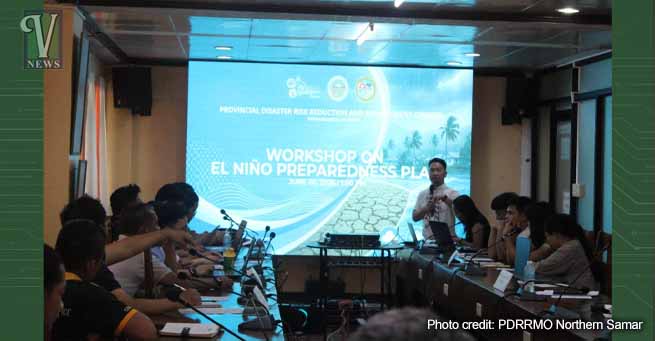
On June 25, the Provincial Disaster Risk Reduction and Management Office (PDRRMO) and the Provincial Agriculture Office gathered more than 25 local government units and national government agencies at the PDRRMO Conference Room in Catarman to develop a unified preparedness plan for Super El Niño.
Rey Josiah Echano, head of the PDRRMO, said the province is making sure that even remote and vulnerable communities are included in planning and protection efforts.
“This is not just about responding when problems happen,” Echano said. “We are making sure that even the farthest communities are better protected before the worst impacts of El Niño are felt.”
He added that the provincial government wants a plan that is practical and based on actual conditions in the province.
“We need something concrete and actionable, something that fits the real situation here in Northern Samar,” he said.
Technical staff from the PDRRMO also presented vulnerability data identifying communities, population groups, and critical facilities most exposed to El Niño-related risks, including areas with limited access to water and essential services.
The Provincial Agriculture Office presented a draft preparedness plan that served as the basis for discussions among participating agencies and sectors.
Working groups were formed to outline specific interventions for agriculture, health, and nutrition; water, sanitation, and hygiene (WASH); infrastructure, energy, and communications; environment; and early warning systems.
Officials said the discussions highlighted how El Niño impacts go beyond agriculture and can affect everyday services such as drinking water supply, electricity, healthcare delivery, and transportation access.
With more than 25 agencies involved, including national government offices and local government units under the disaster preparedness cluster led by the Department of the Interior and Local Government (DILG), the workshop served as a coordination platform for aligning plans and strengthening cooperation.
Provincial officials said the goal is to reduce risks early and ensure that communities are better prepared before drought conditions begin to affect daily life across the province.
Photo credit: PDRRMO Northern Samar


 Northern Samar Approves Right To Care Ordinance: Residents Can Choose Healthcare Representatives
  50 Motorcyles to Help Eastern Visayas Cops Respond Faster
  Bringing Hopes of More Jobs: Northern Samar’s Capul, Biri Eyed as Stops for French Luxury Cruise Voyage
  Northern Samar Wins 2026 Regional Rescue Jamboree
  Northern Samar Placed on Blue Alert as ‘Inday’ Prompts Heightened Disaster Preparations
  Northern Samar Moves Closer to a Cleaner Energy Future with Renewable Energy Roadmap