
 Jazmin Bonifacio
 Posted on August 31, 2026 at 1:08 am

Tabango, Leyte — For health workers in remote towns, disaster training can be difficult to attend simply because of distance.
Training programs are often held outside their municipalities, making it harder for local health workers to join. Some programs may also not be available in their areas.
Americares Philippines is trying to address that problem by bringing the training directly to local government units.
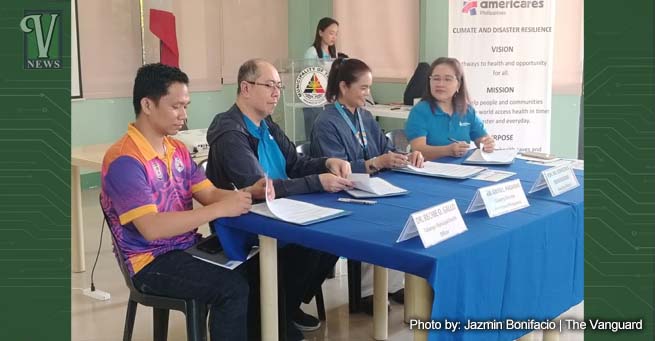
On August 19, Americares Philippines signed a Memorandum of Agreement with the Tabango local government for the CDR Comprehensive Project Level 2, a program aimed at helping the municipality improve its disaster preparedness and response.
Paul Gwyn Pagaran, country director of Americares Philippines, said the organization decided to bring the training to the municipalities because some local government units have limited access to disaster preparedness programs.
He said some trainings are held “far away or not available” to local health workers.
“So we bring the training directly to the LGU,” Pagaran said.
The arrangement allows more health workers to attend without having to travel to another city or municipality.
The training does not stop with lectures.
Health workers are asked to take part in simulation exercises where they practice how they would respond during an emergency.
Pagaran said the exercises include both “psychological first aid” and “physical first aid.”
Trainers watch how participants perform their assigned tasks and correct them when they make mistakes.
Pagaran said this practical part of the training is important because knowing the steps on paper is different from having to perform them during an actual emergency.
In Tabango, Dr. Rechie O. Gallo of the Municipal Health Office said he believes the town’s health workers are already well prepared, putting their training readiness at around 90% to 95%.
But he said there are still problems that could make disaster response difficult.
One of them is water.
“Problema talaga namin ang tubig. Kahit walang disaster problema talaga namin ang tubig. So what if… mag-disaster?” Gallo said.
Water is already limited in Tabango even during normal days. During a disaster, he said, the shortage could become even more serious.
Gallo also raised concerns about the condition of health facilities, particularly their ability to withstand an earthquake.
He said Tabango is vulnerable to ground shaking and questioned whether the existing structures would be able to withstand a strong earthquake.
Heat is becoming part of disaster planning
The risks local health workers prepare for are also changing.
Pagaran said climate change is now being included in the training because extreme heat is becoming a health concern in communities.
He said health workers are seeing cases of “heat stroke and exhaustion.”
Because of the heat, Pagaran said local governments may have to change some of their usual activities.
One example is moving activities to the “early morning” instead of holding them during the hottest part of the day.
He said these changes are part of helping communities deal with the effects of rising temperatures.
For local health workers, disaster preparedness is therefore no longer limited to responding after a typhoon or other major disaster. They also have to prepare for health problems that can happen during periods of extreme heat.
What happens when the project ends?
The training, however, has a time limit.
Americares’ project will run for two years, raising the question of what will happen after the organization leaves the area.
Pagaran said health workers could “forget” some of their skills if they do not have regular opportunities to practice.
He is encouraging local governments to pass an ordinance requiring regular simulation exercises.
Pagaran suggested that these drills be held “once or twice a year.”
A local ordinance could also require the LGU to set aside money for the training and exercises.
The goal is to make the drills part of the municipality’s regular activities instead of something done only when an outside organization provides training.
Tabango wants everyone involved
Mayor Ma. Corazon Remandaban said the municipality has already bought equipment for disaster response.
But she said equipment alone is not enough.
“May mga nabili naman kami na mga equipment, but hindi ko sinasabi na perpekto na natin ito na magagamit,” Remandaban said.
For the mayor, people also need to know how to use the equipment and what to do during an emergency.
She said the municipality is working with partners such as Americares to share disaster-related knowledge with more people in the community.
“Ang pinakaimportante siguro… is sharing of knowledge,” she said.
The municipality is also bringing teachers into its disaster preparedness activities.
Remandaban said teachers can pass what they learn to their students.
“Importante yan na hindi lang barangay health workers. That’s why pati yung mga teachers para ma-impart din nila ang mga knowledge, maturuan din ng mga bata,” she said.
Students are also being taught about disaster prevention and the environment, including the need to take care of the environment as climate change continues to affect communities.
Keeping people ready
Remandaban acknowledged that people may still panic when a disaster happens, no matter how much preparation has been done.
But she said preparation can help reduce the fear of not knowing what to do.
“Nababawasan na yung pangamba natin na wala tayong magawa kung merong dumating na mga disaster,” she said.
For Tabango, the challenge now is to keep that knowledge alive.
The municipality has to continue training its health workers, involve other sectors such as education, and make sure there is money for preparedness activities.
Americares currently supports Tabango in Leyte and General MacArthur in Eastern Samar. Its previous programs have also reached Kawayan in Biliran.
Pagaran said the organization will continue providing technical assistance, but local governments ultimately need to maintain the work themselves.
For a town like Tabango, bringing training directly to the community means health workers do not have to travel far just to learn how to respond to an emergency.
The bigger test will come later, when the trainers are gone and the municipality has to keep doing the drills, updating its plans and teaching the next group of responders.
As Remandaban put it, preparedness comes from learning and practicing.
“Mas meron tayong magagawa kasi nga nag-aral tayo. Natuto tayo at nag-hahanda.”
Photo by: Jazmin Bonifacio | The Vanguard


 Dagami police nab alleged drug personality in Bayabas
  Random drug tests eyed for drivers in Eastern Visayas
  90,110 Eastern Visayas children get measles-rubella shots
  50 Motorcyles to Help Eastern Visayas Cops Respond Faster
  Abuyog Police Step Up Security as Town Fiesta Nears
  ‘Stop making us pay for grid congestion’ – Leyte board to ERC