
 Rolly Magallanes
 Posted on September 14, 2026 at 7:31 am

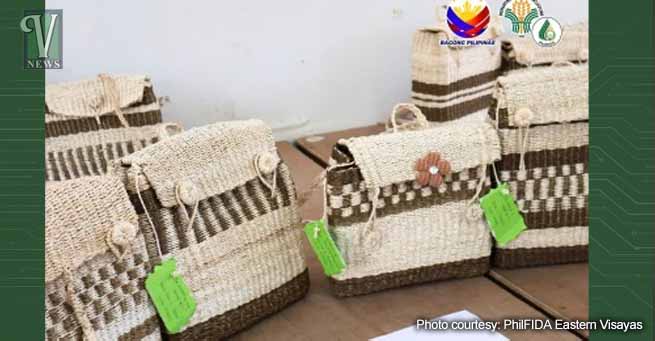
Tacloban City — The Philippine Fiber Industry Development Authority (PhilFIDA) is promoting abaca bag making as an alternative source of income for communities in Leyte and Southern Leyte as the agency works to revive fiber-based handicrafts in the area.
PhilFIDA Eastern Visayas Regional Director Joseph Salas said the agency recently completed a training of trainers in Southern Leyte, where 25 participants learned how to make school bags from abaca twine.
The training was held from September 1 to 4. A similar training is scheduled in Leyte from September 8 to 11.
Salas said the training was designed not only to teach participants how to make abaca products but also to prepare them to train others in their communities.
The participants were taught different stages of school bag production, including design, assembly, finishing and quality control. PhilFIDA brought in trainers from Antique for the activity.
The participants completed the required outputs and produced school bags using locally produced abaca twine.
With the training completed, the 25 participants will serve as an additional pool of trainers who can share their skills with communities in Leyte and other parts of Eastern Visayas.
PhilFIDA plans to conduct more training activities with the support of local government units.
For the agency, the program is also a way to give communities more options for earning from abaca. Instead of selling the fiber as a raw material, residents can learn to turn it into finished products that can be sold in the market.
“By transforming abaca twine into useful, marketable and environmentally friendly products, the training demonstrates the potential of natural fibers to generate income while promoting sustainable community-based enterprises,” Salas said.
The program is being introduced in provinces that already have a strong abaca industry.
Southern Leyte was the top abaca-producing province in Eastern Visayas in 2024, with a reported production of 1,457 metric tons.
Leyte ranked third with 606.16 metric tons.
Abaca, also known as Manila hemp, is an important agricultural commodity in the region and provides income to many farming communities.
By developing products such as school bags, PhilFIDA hopes to create additional uses for locally produced fiber while providing communities with skills they can use for livelihood activities.
The training is part of broader efforts by the Department of Agriculture, under Secretary Francisco Tiu Laurel Jr., and PhilFIDA Executive Director Arnold Atienza to strengthen the Philippine abaca industry, revive fiber-based handicrafts and promote value-added products.
The agency’s approach is to train people who can then train others, allowing the skills to reach more fiber-producing communities.
The upcoming training in Leyte, scheduled from September 8 to 11, aims to expand that pool.
For communities already producing abaca, the program offers another possibility: earning from the fiber not only as a farm product but also as a finished item such as a school bag.
Photo courtesy: PhilFIDA Eastern Visayas


 Napolcom Urges Stronger School-Community Ties After San Jose Shooting
  NBI Raids Illegal Gambling Operations Using Allegedly Cloned PCSO POS Machines
  PNP Reassigns Capoy; Cardiño to Head Eastern Visayas Police
  Eastern Visayas braces for barangay, SK polls as Senate weighs 5-year terms
  From Selling Vegetables to Growing Them
  Legal Battle Looms Over Cancabato Bay Causeway Project