
 The Vanguard
 Posted on September 26, 2026 at 3:56 pm
The Department of Social Welfare and Development has taken a quiet but significant step toward addressing a need that often goes unnoticed until tragedy strikes: the mental and emotional well-being of children and adolescents who live through crises.
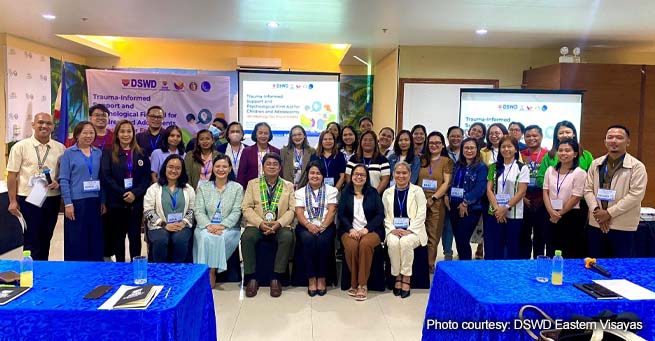
The DSWD regional office 8 and the Ateneo Bulatao Center recently launched the second batch of a five-day workshop in Tolosa, Leyte. The training, titled Trauma-Informed Support and Psychological First Aid for Children and Adolescents Workshop for Frontliners, brought together representatives from national and local government agencies, schools, health and social welfare offices, and partner organizations across Eastern Visayas.
The participants represent a broad cross-section of the community’s first responders to childhood trauma. They come from the Department of Justice, the Department of Education Regional Office VIII, the Philippine National Police Women and Children Protection Desk, selected national high schools, provincial social welfare and development offices, provincial health offices, the City Social Welfare and Development Office of Ormoc, and DSWD sub-field offices in the Eastern Visayas region.
The five-day training seeks to equip participants with the knowledge and skills to provide appropriate, timely, and compassionate psychosocial interventions to children and adolescents experiencing trauma and other crisis situations.
Day 1 covered legal bases, child protection and juvenile justice, multidisciplinary and policy approaches, and DepEd Order No. 006, series of 2026, or the Guidelines for Ensuring a Safe and Motivating Learning Environment. The sessions also included case management and a cliniquing session to help participants apply what they learned.
This is the kind of work that does not make headlines. It does not produce ribbon-cuttings or photo opportunities. But it addresses a gap that communities across Eastern Visayas know too well. Children who endure disasters, violence, displacement, or family upheaval carry wounds that are not always visible. Without proper support, those wounds can shape the rest of their lives.
The collaborative nature of the training is equally important. Trauma is rarely addressed by a single agency. A child in crisis may encounter a teacher, a social worker, a police officer, and a health provider, sometimes all within the same week. If these frontliners are not coordinated, the child can fall through the cracks. By bringing them together in one room, the workshop builds the kind of coordination that a responsive support system requires.
The DSWD’s effort deserves recognition. But training two batches of frontliners is not enough. The need is ongoing, and the pool of trained personnel remains small relative to the number of children who need help.
We call on local government units, school divisions, and health offices across Eastern Visayas to invest in this effort. Send more of your personnel to these trainings. Build referral systems that connect schools, health centers, and social welfare offices. Make psychosocial support a standard part of your disaster and crisis response, not an afterthought.
Most of all, we ask community leaders to recognize that healing a child is not a luxury. It is a necessity. And it begins with frontliners who know what to do when a young person is hurting.
The DSWD has laid the groundwork. The rest of us must build on it.
Photo courtesy: DSWD Eastern Visayas


 Marcos Inspects Walang Gutom Kitchen in Catbalogan
  Catbalogan Walang Gutom Kitchen to Serve 400 Meals Daily Starting October
  The Lesson from Tacloban: Mental Health Cannot Wait
  Tacloban Fisherfolk’s Livelihood Project Delayed by Demolition Concerns
  Romualdez Pushes Stronger Child Protection, Mental Health Reforms After School Tragedy