
 Jazmin Bonifacio & Christian Ray Torres
PART 3: THE MARITIME CORRIDOR
The Blind Spots: Where Maritime Monitoring Falls Short
Posted on November 7, 2026 at 8:36 AM

A ferry terminal has gates. A highway has checkpoints. But along Eastern Visayas’ coastline, boats can travel through waters that are difficult to monitor. Packages suspected to contain illegal drugs may remain undiscovered until someone finds them.
Sometimes, that person is a fisherman.
For authorities, stopping drug trafficking is not just about identifying routes. They also have to determine what is being transported, who is behind the shipments and whether they can intercept the cargo before it reaches another part of the country.
Eastern Visayas lies along major transport links between Luzon and Mindanao. Ferries carry passengers, vehicles and goods across the region. Highways connect ports to inland communities, while smaller landing areas serve fishing communities and local boat operators.
These routes are essential to trade and travel. They can also be used to transport illegal drugs.
The Philippine Drug Enforcement Agency (PDEA) has repeatedly identified Eastern Visayas as a transshipment corridor for illegal drugs.
The region continues to serve as a passageway for major land and ferry routes linking Luzon and Mindanao, said PDEA Eastern Visayas Assistant Regional Director Atty. Ma. Rhea D. Caminong.
“Virtually every area in Eastern Visayas carries high risk because the region’s geography and transportation routes are open,” she said.
Caminong said PDEA cannot monitor every entry and exit point across the region’s ports and coastlines.
That leaves authorities with a difficult task: distinguishing ordinary movement from shipments carrying illegal drugs.
Traffickers need only get their cargo through. Law enforcement officers, meanwhile, must identify suspicious shipments and intercept them without disrupting the movement of legitimate passengers and goods.
The problem is particularly evident when drug packages turn up along the shore rather than at a checkpoint or port.
THE DRUGS FOUND ALONG THE SHORE
In March 2024, a fisherman found 20 bricks of cocaine off Arteche, Eastern Samar.
The packages weighed 21.19 kilograms and had an estimated value of P111.85 million, according to incident details cited in this investigation.
The discovery showed how a major drug recovery can happen far from a formal checkpoint. No enforcement officer was present when the packages were first spotted.
But the recovery did not answer the questions surrounding the shipment.
Authorities still had to establish where the packages came from, how long they had been at sea, whether a vessel had carried them and who was supposed to receive them.
The place where drugs are recovered does not necessarily reveal where they entered the country or the route they followed. Without evidence tracing their movement, the recovery site cannot be treated as a confirmed point along a trafficking route.
Other reported seizures in Eastern Visayas also leave questions unanswered.
In Allen, Northern Samar, one reported case involved about 10 kilograms of shabu, valued at between P68 million and P69 million. Another seizure, mentioned in questions submitted to PDEA, involved about 37 kilograms of shabu.
Available information has not established whether these were separate incidents. Their dates, quantities and estimated values also need to be checked against the original incident reports.
In Gandara, Samar, authorities reportedly seized 88.49 kilograms of shabu in October 2019, with an estimated value of P600 million. Reports linked the shipment to Cebu, but the exact recovery location and intended destination still need confirmation.
Other reported recoveries of suspected cocaine in Eastern Samar, Guiuan, Homonhon and nearby coastal areas add to the record of drug discoveries along the region’s shores.
The cases show that large quantities of illegal drugs have been recovered in Eastern Visayas. They do not prove that all the shipments belonged to one network or travelled along the same route.
Seizure records also show only the drugs that authorities managed to find.
Asked how much illegal drug volume may have passed through Eastern Visayas without being detected, Caminong said PDEA has no statistical estimate.
Without that figure, it is difficult to determine how much of the trade authorities are actually intercepting.
An increase in seizures could mean more drugs are moving through the region. It could also reflect better intelligence or more enforcement operations. A decline may have several explanations as well.
Seizure figures alone cannot show the full scale of trafficking or how much cargo escapes detection.
WHO IS WATCHING THE CORRIDOR?
No single agency is responsible for monitoring all the routes used to move illegal drugs through Eastern Visayas.
PDEA handles drug intelligence, investigations and interdiction operations within its mandate. The Philippine National Police, including its Maritime Police units, provides law enforcement and operational support. The Philippine Coast Guard performs maritime security, safety and law enforcement functions under its mandate.
Port authorities and operators oversee security within their facilities. Local governments and barangays can help with community coordination, prevention and reporting.
For these offices to work together, information has to reach the right people in time.
PDEA coordinates with the PNP and the Coast Guard through regional joint intelligence workshops, Caminong said. She also cited the Regional Peace and Order Council’s Special Action Committee, the Regional Inter-Agency Coordinating Group and the agency’s Regional Operation Center.
PDEA also has agreements with the PNP and the Land Transportation Franchising and Regulatory Board covering highway enforcement, public transport and driver drug-testing campaigns.
Caminong described inter-agency coordination in Region VIII as strong and said it had contributed to successful operations.
But the real test comes when authorities receive a report and have to respond.
When a fisherman finds suspicious packages off a remote barangay, who receives the first call? How long does it take for the report to reach PDEA, the police or the nearest Coast Guard unit?
If investigators later find that a shipment may have travelled by road or passed through a ferry terminal, which agency handles the next stage of the investigation? How is information shared, and who keeps track of the case?
Agency statements and agreements describe how coordination is supposed to work. Dispatch logs, incident reports and referral records would show what happens after a report reaches authorities.
A delay does not automatically mean an agency failed to respond. Officers may need to verify the information, responders may be far from the area, and bad weather or roug h seas may prevent an immediate deployment.
Still, authorities should be able to explain delays and identify problems that need to be addressed.
The issue is not simply whether agencies coordinate, but whether information reaches them early enough to act.
PORTS ARE EASIER TO WATCH. BUT ARE THEY?
Major ferry terminals have something that open waters do not: designated areas where inspections and security checks can take place.
Vehicles pass through access points, passengers board at terminals, and security personnel can be assigned to busy areas.
But not all ports have the same facilities, personnel or security arrangements.
Some mainly handle passengers and vehicles. Others serve cargo operations or smaller vessels. The agencies responsible for security also differ from one facility to another.
PDEA has identified Allen, Liloan and Ormoc among the region’s important transit facilities. The agency has also pointed to the difficulty of monitoring smaller and unofficial coastal landing areas.
The concern is not only how many ports need to be watched, but whether authorities have enough personnel and equipment to do the job.
PDEA works with local police and other enforcement agencies to address these limitations, Caminong said. She also pointed to the need for more narcotics detection dogs, particularly at transit ports.
The agency has its own K-9 capability and works with PNP narcotics detection dog units through joint initiatives, including a program called “Dogs at Your Service.”
How many detection dogs are available for deployment across Eastern Visayas? Which ports have regular K-9 coverage? How many handlers are assigned, and how often are the teams deployed?
The same questions apply to scanners and other screening equipment.
Having screening equipment does not mean every vehicle, passenger or cargo shipment is checked. Actual coverage depends on the facility, operating hours, available personnel, equipment condition and maintenance.
This investigation has yet to establish how extensively the region’s major transit facilities screen passengers, vehicles and cargo. Information is also needed on the equipment available, inspection procedures and periods when machines are out of service.
Different facilities may require different security arrangements. A passenger terminal does not operate in the same way as a cargo port or a small landing area.
But where authorities have identified a facility as vulnerable to drug trafficking, they should be able to say what resources are assigned there and how inspections are carried out.
BEYOND THE PORT GATES
Monitoring becomes harder once boats move away from formal terminals.
Eastern Samar’s Pacific-facing coast, the islands around Guiuan and Homonhon, and other coastal communities present a different set of concerns.
Fishing boats and small vessels are part of everyday life in these areas. Their presence at sea is not, by itself, a sign of criminal activity.
At the same time, these waters are difficult to monitor continuously, especially when patrol personnel and vessels are limited.
Caminong acknowledged that PDEA cannot independently monitor every open or unofficial coastal landing area while also covering major transport facilities.
The Coast Guard’s ability to respond depends on available patrol vessels, the location of its stations, weather and sea conditions.
How much of the coastline can authorities realistically monitor with the resources they have?
The number of operational patrol vessels, available monitoring systems and response capabilities would help answer that question, particularly in coastal areas far from major stations.
Authorities can provide general figures on personnel and operational assets without disclosing patrol schedules or surveillance details that could compromise security.
A vessel appearing on an agency inventory is not necessarily ready for immediate deployment. A monitoring system may also cover certain areas without providing a continuous picture of every boat at sea.
These limitations are important in a region made up of several provinces and islands. The presence of patrol units and surveillance equipment does not automatically mean the entire coastline is under regular watch.
WHEN THE FIRST REPORT COMES FROM A FISHERMAN
In some coastal drug recoveries, the first person to encounter the packages is not an enforcement officer.
It is a fisherman.
Local fisherfolk were the most frequent reporters of floating cocaine packages recovered in Eastern Samar, according to Caminong.
After the 2024 recoveries, PDEA launched Oplan Bay, an information campaign intended to help fishermen identify suspicious floating packages and report them to authorities.
The agency also introduced Oplan Seaport. Caminong said the program began around June or July 2024 and offers incentives or rewards to community members who provide actionable information about drug personalities attempting to transport illegal goods through local ports.
The programs rely partly on people who live and work along the coast, where law enforcement officers cannot be present at all times.
But encouraging residents to report suspicious activity is only one part of the response.
Who answers when a fisherman calls? How quickly does the report reach responders? Can residents report a discovery without exposing their identities? What happens when the person being reported is someone they know?
These concerns are especially serious in small fishing communities, where residents may know one another and fear retaliation.
People who find suspicious packages should not be expected to approach unfamiliar vessels, open the packages or investigate possible trafficking on their own. They need clear instructions on whom to contact and how to stay safe.
Caminong said drug syndicates sometimes recruit local residents as lookouts, couriers or boat operators by offering quick financial gain.
That claim needs to be examined through documented recruitment cases, court records and accounts from residents. It should not be used to cast suspicion on entire fishing communities.
A fisherman who finds cocaine is not automatically involved in trafficking. A barangay where drugs are recovered is not necessarily a drug distribution or trafficking hub.
Investigators need to establish what happened in each case, including whether residents were recruited, threatened or forced to take part in illegal activities.
People who report suspicious packages also need accessible reporting channels and protection from possible threats.
FEWER DRUG-AFFECTED BARANGAYS, BUT WHAT DOES IT TELL US?
Eastern Visayas has reported a decline in drug-affected barangays, from 42.15% in 2018 to 3.41% in 2024, based on regional figures cited in this series.
The decline is significant in measuring the results of community-level drug-clearing efforts.
But it does not necessarily mean the region is less exposed to large drug shipments.
The two figures measure different things.
The barangay drug-clearing program assesses local drug conditions based on established requirements. It does not, by itself, measure whether a coastal community is vulnerable to maritime smuggling.
A barangay may have made progress in addressing local drug activity while remaining near a highway, ferry route or coastline that could be used to transport illegal drugs.
Shipments may also pass through a community without being intended for local distribution.
For this reason, the decline in drug-affected barangays cannot establish how many shipments have entered the region or how much trafficking remains undetected.
The figures also need to be checked against the annual barangay inventories, the total number of barangays used as the denominator and the assessment criteria applied in both years. These details are needed to determine whether the percentages can be compared directly.
PDEA should also clarify whether its assessments include indicators for large-scale drug transshipment.
The improvement in barangay drug-clearing figures is worth noting. But it does not answer the separate question of how effectively authorities are stopping large shipments from moving through the region.
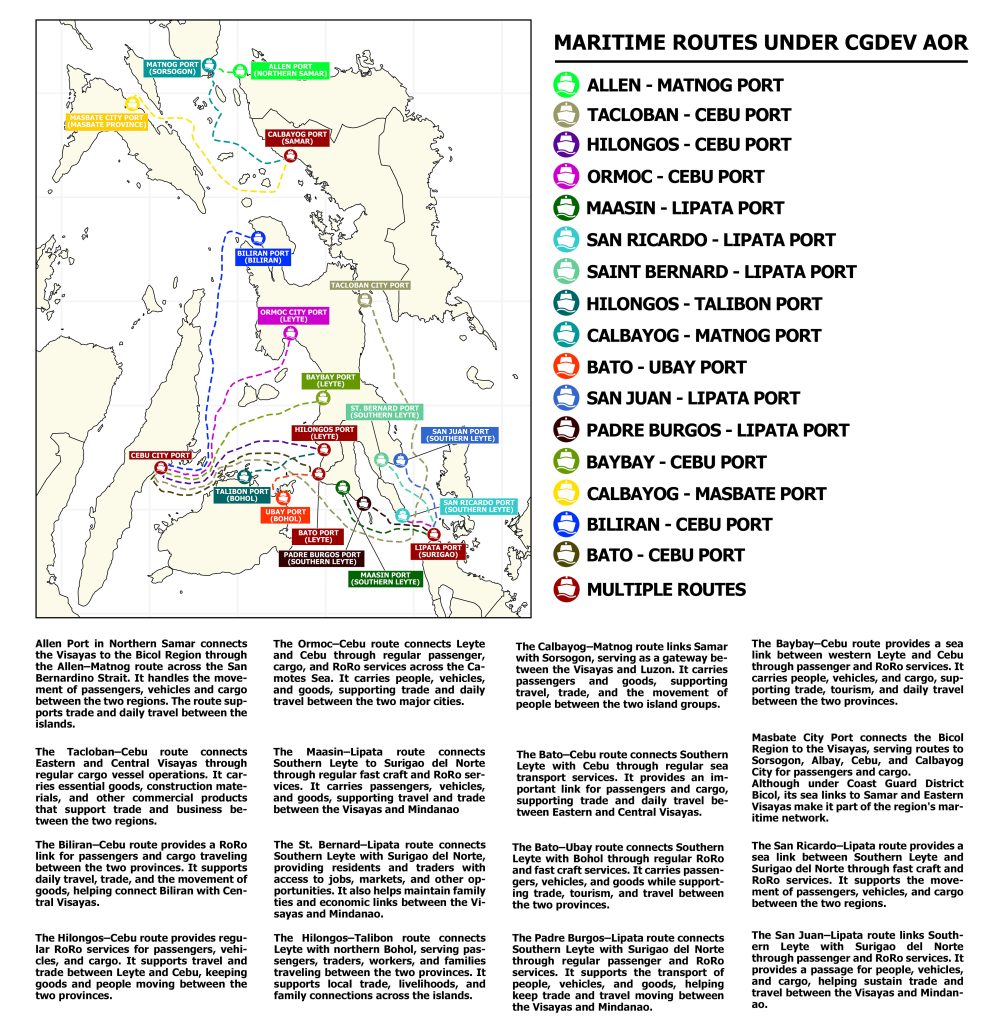
MAP DATA SOURCE: Philippine Coast Guard – Eastern Visayas MAP DESIGN, DEVELOPMENT & GEOSPATIAL VISUALIZATION:
Jazmin Bonifacio and Christian Ray Torres MAPPING PLATFORMS: Google Earth Pro and Google My Maps INVESTIGATIVE PROJECT:
The Maritime Corridor: Drugs, the Sea, and Eastern Visayas’ Place in the Trafficking Route. THE VANGUARD | 2026
THE PEOPLE BEHIND THE SHIPMENTS
PDEA places considerable emphasis on high-impact operations and high-value targets.
The agency rarely prioritizes street-level pushers or people found with small quantities of drugs, Caminong said. Its focus is on major transactors handling large volumes of shabu, dismantling drug dens and investigating the alleged involvement of corrupt public officials in the illegal drug trade.
She reported that PDEA recorded more than 1,200 operations in 2024.
Caminong also said large seizure volumes may reflect stronger enforcement and intelligence work rather than an increase in drug proliferation.
But the number of operations and the quantity of drugs seized do not necessarily show who controls the trade.
According to the PDEA official, trafficking networks are divided into separate roles. Couriers often refuse to identify their suppliers, financiers or higher-level contacts.
This can leave investigators with only the people caught carrying the drugs, while those who arranged or financed the shipment remain unidentified.
WHAT HAPPENS AFTER A COURIER IS ARRESTED?
Can investigators identify the people who financed a shipment? Do they trace payments, transport arrangements and intended recipients? Are separate seizures linked through evidence, or are they handled as unrelated cases?
These questions matter because the value of a seized shipment does not necessarily reflect how much the person carrying it stands to earn. Those controlling the trade may never be present when drugs are recovered.
PDEA conducts financial investigations with the Anti-Money Laundering Council, using deputized financial investigators to trace unexplained wealth and pursue appropriate legal remedies, Caminong said.
The results of these investigations deserve closer examination.
How many major drug cases have led to financial investigations? What assets, if any, were identified? Did authorities seek asset preservation, freezing or forfeiture, and what happened to those cases?
Financial investigations can help authorities determine whether their operations are reaching beyond the people transporting the drugs.
But unexplained wealth alone does not prove involvement in drug trafficking. Allegations must be supported by evidence and handled through the proper legal process.
To dismantle trafficking networks, investigators have to follow the money as well as the cargo.
SIX MAJOR CASES STILL IN COURT
PDEA Region VIII had six major drug cases pending before the courts at the time of the October 27 interview, Caminong said.
She said the agency trains its personnel in evidence handling and compliance with Section 21 of Republic Act No. 9165, which covers the custody and disposition of seized drugs and related evidence.
The law has since been amended, and the requirements applicable to each case must be considered alongside relevant court rulings.
A drug seizure is only the start of a criminal case.
Investigators must document the recovery, identify the substances, preserve the evidence and establish the chain of custody. Prosecutors then have to present the evidence in court.
A case depends not only on the quantity of drugs seized but also on the quality of the investigation and the evidence supporting the charges.
The six cases cited by Caminong provide an opportunity to examine the progress of major drug investigations in the region.
What charges were filed? What quantity of drugs was involved? What is the current status of each case? Have there been significant court rulings, dismissals or convictions?
Did the investigations identify alleged suppliers, financiers or intended recipients?
Answering these questions requires updated case information and, where available, court records.
The number of pending cases alone does not show whether enforcement efforts are succeeding or failing. Conviction figures also need context, including the period covered, the types of cases included and the total number of cases filed.
What matters is whether investigations can stand up in court and help identify the people directing the trade.
THE MONEY OFFERED TO MOVE A PACKAGE
For some coastal residents, an encounter with drug trafficking may begin with an offer of money.
Caminong said syndicates sometimes recruit locals as couriers, lookouts or boat operators, promising quick earnings.
For people who depend on fishing or irregular work, such offers may be difficult to ignore, particularly when household income is uncertain.
But poverty is not evidence of involvement in trafficking, nor does it excuse criminal activity.
The circumstances of each recruitment attempt need to be established through evidence and the accounts of those involved.
A fisherman may find a package without knowing who left it there. Another resident may be asked to transport something without being told what it contains. Someone who reports suspicious activity may fear threats or retaliation.
These situations should not be treated as one and the same.
The investigation needs to document recruitment attempts, threats and residents’ experiences through careful and confidential interviews. It should also look into whether reporting channels are accessible and what assistance authorities can provide to people facing threats.
The value of recovered drugs may reach millions of pesos. But residents who encounter suspicious packages may have little protection and limited access to government assistance.
Their accounts should be heard without treating entire communities as suspects.
WHEN INTELLIGENCE ARRIVES TOO LATE
Asked why drug shipments continue to pass through Eastern Visayas despite enforcement operations, Caminong pointed to the region’s role as a transit corridor.
She said shipments mov e quickly and that interdiction efforts often fail when actionable intelligence arrives too late.
When shipments pass through Eastern Visayas before authorities can intercept them, PDEA coordinates with neighbouring regions where the drugs may later be seized, she said.
The timing of intelligence is therefore an important part of the investigation. Authorities need to know when the first warning came in and how quickly they were able to act.
How early do investigators learn about a shipment? What information do they receive, and what action can they take?
Knowing that drugs have passed through a route before is different from receiving credible information about a specific shipment before it leaves.
Police may set up checkpoints, but officers cannot know which vehicle to stop without information identifying it as a possible carrier.
Ports may have inspection procedures, but these cannot guarantee that every shipment will be detected.
Coast Guard personnel may be on duty, but they may not know about packages floating offshore until someone reports them.
None of these situations, on its own, proves negligence or operational failure. They do, however, show why the timing and reach of intelligence gathering need to be examined.
To find out where the process breaks down, investigators need to review selected drug cases, starting with the earliest documented report or intelligence lead.
When did authorities first receive information? Which agency received it? When was it shared with other offices? What action followed?
Was the shipment intercepted in Eastern Visayas, or was it recovered only after reaching another location?
The answers may show whether late intelligence, limited resources, gaps in surveillance or other factors affected the outcome.
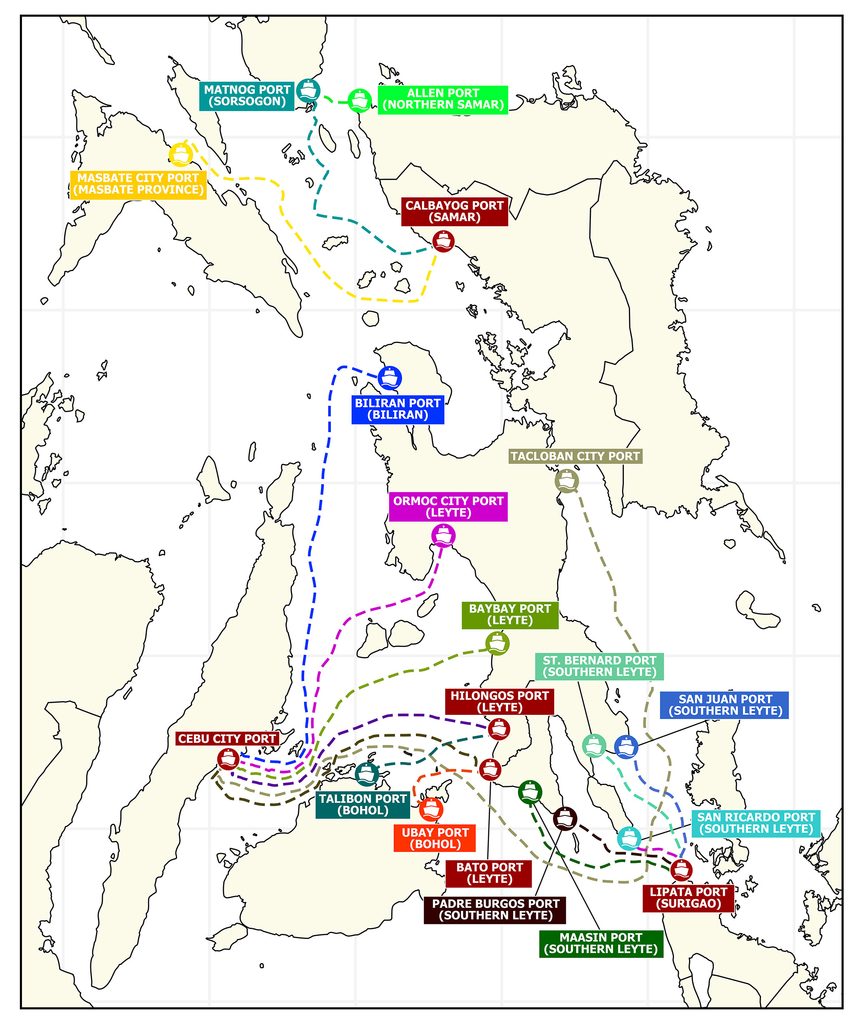
MAP DATA SOURCE: Philippine Coast Guard – Eastern Visayas MAP DESIGN, DEVELOPMENT & GEOSPATIAL VISUALIZATION:
Jazmin Bonifacio and Christian Ray Torres MAPPING PLATFORMS: Google Earth Pro and Google My Maps INVESTIGATIVE PROJECT:
The Maritime Corridor: Drugs, the Sea, and Eastern Visayas’ Place in the Trafficking Route. THE VANGUARD | 2026
Without those timelines, it is difficult to explain why some shipments get through or determine whether the same problems occur in different cases.
THE GAPS ARE NOT JUST ALONG THE COAST
Eastern Visayas has recorded major drug seizures. Authorities have conducted operations, arrested suspects and recovered packages from coastal waters.
PDEA has also acknowledged that it cannot monitor every entry and exit point across the region.
But the available information does not yet show exactly where enforcement falls short or how serious those gaps are.
Some ports may have better screening equipment than others. Some coastal communities may have established contacts with enforcement units, while others may have difficulty reaching responders.
The same differences may be seen in investigations. Some cases may lead authorities to alleged suppliers and financiers, while others may focus mainly on the people caught carrying the drugs.
These issues need to be established through agency records and case reviews, not assumptions.
Authorities should provide information on available personnel and equipment, the extent of screening at major transit facilities and response times when suspicious packages are reported. They should also explain how reports from remote communities are handled, particularly when enforcement units cannot respond immediately.
The decline in drug-affected barangays is worth recognizing, but it does not answer whether authorities are stopping large shipments from passing through the region.
For coastal residents, the problem is not just a route marked on a map. It may mean finding suspicious packages at sea, being approached by recruiters or deciding whether it is safe to report what they have seen.
They should not be left to shoulder the responsibility of protecting the coastline.
Eastern Visayas will continue to serve as a transport link between parts of the country. Its roads, ports and coastal communities support trade, travel and livelihoods.
Authorities need to show how they monitor the routes they have identified as vulnerable. That includes accounting for available resources, documenting response times, making reporting channels accessible and pursuing those who finance and organize the trade.
PDEA has identified the corridor. Drug seizures show that illegal shipments have reached the region.
But the available figures do not show how much has passed through without being detected.
If authorities know the corridor exists, why do large drug shipments still get through?


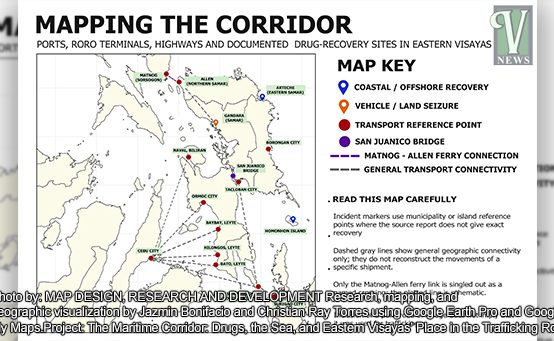 FROM OPEN WATERS TO SHORE : Mapping the Maritime Routes Behind Drug Seizures in Eastern Visayas
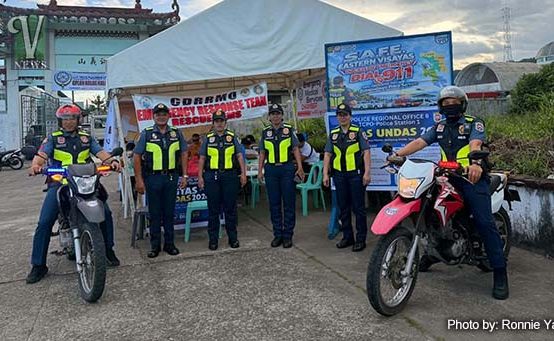 Tacloban Police Extend Security Patrols Ahead of Yolanda Anniversary
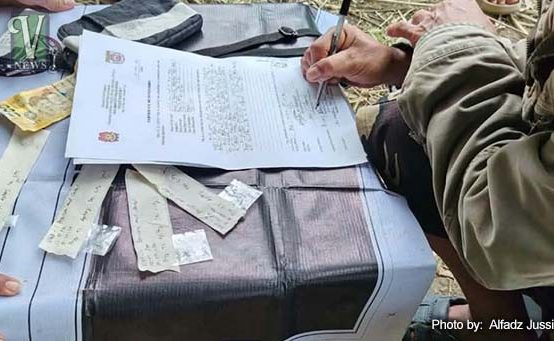 Fruit vendor arrested in Tacloban buy-bust operation
 Tacloban Dispatcher Nabbed; P28,000 Suspected Shabu Seized
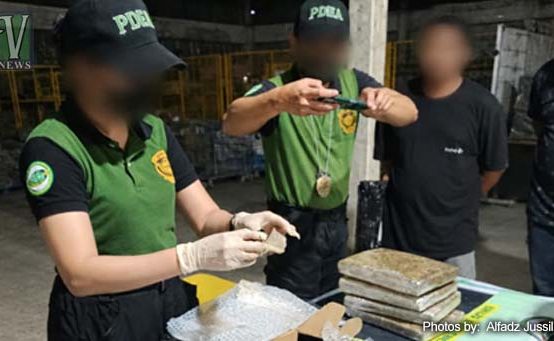 5.5 Kilos of Suspected Marijuana Seized at Tacloban Parcel Hub
 Four Men Arrested in Tacloban Buy-Bust; P63,376 Suspected Shabu Seized