
 Jazmin Bonifacio
 Posted on September 2, 2026 at 5:29 pm

Abuyog, Leyte — Somewhere in the mountains, along the coast, or deep in one of Abuyog’s interior barangays, an emergency call can set a clock ticking.
A patient may be struggling to breathe. Someone may have been badly injured. A family may be waiting for an ambulance.
But before help can arrive, the ambulance has to cover the distance.
In Abuyog, that journey can take about 45 minutes when the ambulance is coming from the municipal center.
For a municipality with 63 barangays spread across roughly 688 square kilometers, distance is part of everyday life.
Abuyog stretches from the communities along Leyte Gulf to mountainous areas inland. Rivers and creeks cut through parts of the municipality, while some villages are reached only after long trips from the town center.
On an ordinary day, the distance may simply mean a longer ride home.
During a medical emergency, it can mean precious time.
The problem becomes harder when the weather turns bad.
Abuyog is exposed to typhoons, flooding, rain-induced landslides, storm surge, and other coastal hazards. In April 2022, a rainfall-triggered landslide in Barangay Pilar reached the coast and generated a destructive tsunami — a reminder of how quickly conditions can change in communities where the mountains meet the sea.
For the local government, the question was not simply how to get more ambulances.
It was how to get an ambulance closer to the people who need one.
Moving an ambulance closer
The municipality’s answer was to spread its emergency response across Abuyog.
Instead of keeping its rescue services at the municipal center, the local government established satellite rescue stations in different areas.
“I established satellite offices, one on the mountain side, one on the coastal side, and one in the interior areas,” Mayor Lemuel Gin K. Traya said.
One station serves the mountain side. Another covers the coast. A third serves the interior.
The reasoning is simple.
When a patient is far from the town center, the ambulance should not have to start its journey from there if there is another unit closer.
For residents near the municipal center, an ambulance may arrive after a relatively short trip.
For those in far-flung barangays, the difference can be significant.
A road that takes a few minutes under normal conditions can take much longer when rain causes flooding or when landslides affect routes.
In those moments, the location of an ambulance matters almost as much as the ambulance itself.
The Ambulance cannot stay in one place
There is, however, another problem.
An ambulance that is close to a community today may be far away tomorrow because it has been sent to transport a patient to a hospital.
The municipality has tried to prevent that gap in coverage.
At the satellite stations, ambulances are kept on standby 24 hours a day.
“24 hours… an ambulance is already on standby,” Traya said.
When an ambulance is dispatched, a relief vehicle takes its place.
“Automatic may relibo… walang problema,” Traya said.
The arrangement means an ambulance can leave to bring a patient to a hospital without leaving the community it normally serves completely without emergency coverage.
For Abuyog, where communities are separated by long distances and difficult terrain, keeping another vehicle ready is part of making the satellite system work.
More than the distance
Getting to a hospital is not only a question of distance.
For some families, it is also a question of money.
The municipality provides emergency ambulance services free of charge to indigent residents.
For Traya, the reason is straightforward.
“Importante health han tanan,” he said.
For families already facing the cost of medicines, hospital care, or other medical needs, not having to pay for the ambulance can remove one concern at a critical moment.
In remote communities, where access to health facilities can already be difficult, transportation can become another barrier.
The municipality’s approach tries to address both.
Put the ambulance closer.
And make emergency transport available to those who cannot afford it.
A different way of looking at distance
Abuyog cannot make its 63 barangays any closer to one another.
Its mountains will remain mountains. Its coastal communities will remain along Leyte Gulf. Its interior barangays will continue to be separated from the municipal center by roads, rivers, and terrain.
The risks will remain, too.
Typhoons can bring heavy rain. Flooding can affect roads and communities. Rainfall can trigger landslides. Coastal areas remain exposed to storm surge and tsunami hazards.
But the municipality can decide where its emergency responders wait.
That is the thinking behind the satellite rescue stations.
Instead of every emergency beginning with a trip from the municipal center, some ambulances are already positioned closer to the communities they serve.
They remain on standby around the clock.
And when one leaves, another can take its place.
For the local government, the goal is not simply to put more vehicles on the road.
It is to shorten the distance between an emergency call and the arrival of help.
In Abuyog, that distance can be measured in kilometers.
But for the person waiting for an ambulance, it is more likely to be measured in minutes.
And when someone is fighting to stay alive, those minutes matter.
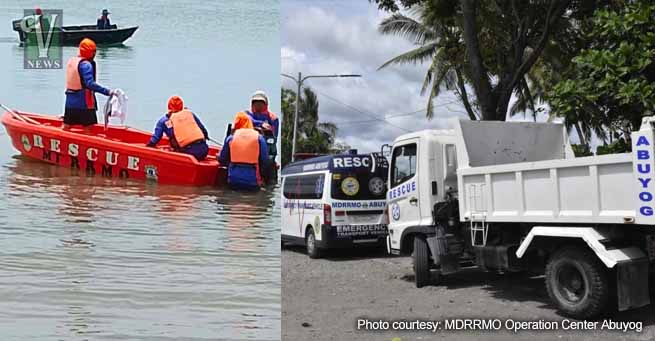
Photo courtesy: MDRRMO Operation Center Abuyog


 Disaster Training Reaches Leyte’s Frontline Health Workers
  Dagami police nab alleged drug personality in Bayabas
  Random drug tests eyed for drivers in Eastern Visayas
  90,110 Eastern Visayas children get measles-rubella shots
  50 Motorcyles to Help Eastern Visayas Cops Respond Faster
  Abuyog Police Step Up Security as Town Fiesta Nears