
 Jazmin Bonifacio
Posted on October 20, 2026 at 12:13 pm

Tacloban City — Studying politics in their own communities gives regional researchers a close look at how local governments work. But that familiarity does not always make it easier for them to obtain government records or secure interviews with public officials.
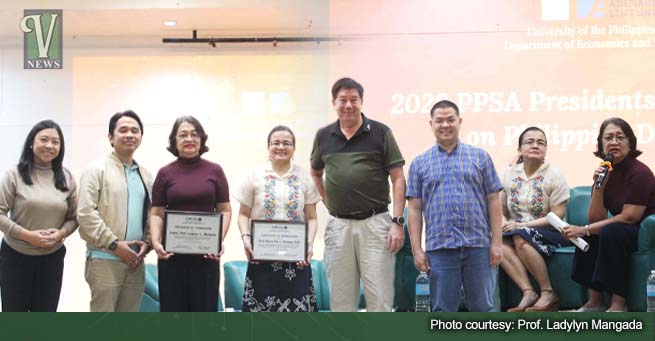
Dr. Ladylyn Mangada, an associate professor at the University of the Philippines Tacloban College, raised the issue during the Philippine Political Science Association (PPSA) Presidents’ Lecture Series on Philippine Democracy on September 30, 2026, at the UP Tacloban Library Hall.
As a faculty reactor, Mangada shared insights from her research in Eastern Visayas following a lecture by UP Diliman Professor Maria Ela L. Atienza on the challenges and opportunities in studying local politics, democracy, and governance in the Philippines.
Regional researchers often have an advantage: they understand the local language, history, institutions, and relationships that shape their communities. But knowing the place well does not necessarily mean they can get the information they need.
In some cases, researchers from outside the region may find it easier to secure interviews or access records. Those based in the community may face questions about their political affiliations, particularly if their personal connections or previous research projects are linked to local political figures.
Such perceptions can make officials less willing to cooperate, limiting the information researchers can gather and the issues they can examine.
Mangada also pointed out that local politics goes beyond elections and political families. It can be seen in decisions on disaster response, evacuation, agricultural assistance, humanitarian aid, youth programs, and the distribution of public resources.
These are also areas where researchers can examine how power is exercised and how government decisions affect communities.
But studying a place from within comes with its own challenges. Researchers who are familiar with local practices may begin to see them as normal without asking who benefits, how these arrangements continue, or how they affect people with less political influence.
Funding is another concern. Research opportunities are not spread evenly across communities. Some areas attract more grants, donor-funded projects, and university partnerships, while others receive less attention despite having important questions about governance and public services.
Local government units also do not always set aside money specifically for academic research. As a result, researchers often depend on available government programs, donor priorities, and existing institutional partnerships.
Communities that have already attracted research projects may continue to receive attention, while others remain understudied. This can leave gaps in the wider understanding of how local politics works across the country.
For university faculty members, finding time to conduct research is another challenge. Teaching, advising students, handling administrative duties, joining committees, and carrying out extension work can leave little time to write studies and prepare them for publication.
Mangada stressed that supporting young researchers requires more than short-term training or workshops. They also need continued guidance from experienced academics, along with time and resources to carry their studies from the planning stage to publication.
She also underscored the need for regional universities to take a leading role in research, rather than serving mainly as fieldwork sites for institutions based elsewhere. Local scholars should have opportunities to develop their own research questions, lead projects, and contribute to wider discussions on Philippine politics.
The lecture series was organized by UP Tacloban College in partnership with the PPSA and Konrad-Adenauer-Stiftung Philippines as part of the association’s 65th founding anniversary. It drew more than 200 political science students, teachers, researchers, and community workers from Leyte and Samar.
The discussion underscored the difficulties regional scholars face not only in getting access to government information but also in securing the funding, time, and institutional support needed to turn their research into published work.
Photo courtesy: Prof. Ladylyn Mangada


 ‘The Legend of Kankabatok and the First Blade’
 IMNet helps Tacloban journalists prepare for risks in the field
 DPWH to Push Through with P4.77B Tacloban Causeway Project Despite Contract Terminations
 2 Suspected Drug Personalities Nabbed in Tacloban Buy-Bust
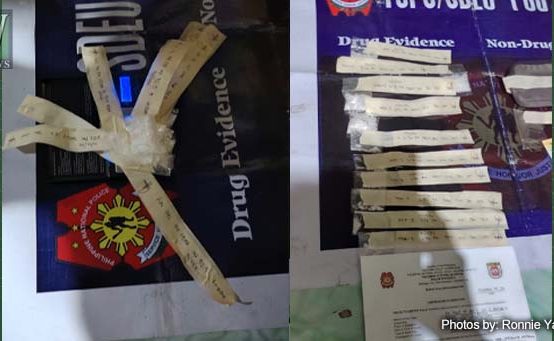 Police Seize P172K Worth of Suspected Shabu in Tacloban Buy-Bust
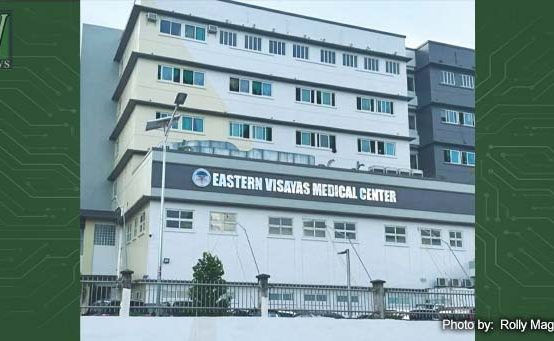 EVMC spends P1.08B for Zero Balance Billing