
 Ronnie Yanuario
 Posted on Jan. 8, 2026 at 1:04 pm
BAYBAY, Leyte — Long before discussions about climate change reached conference halls, the Energy Development Corporation (EDC) had been quietly protecting the forests around Leyte Geothermal Production Field safeguarding water sources, sheltering wildlife, and supporting nearby communities.
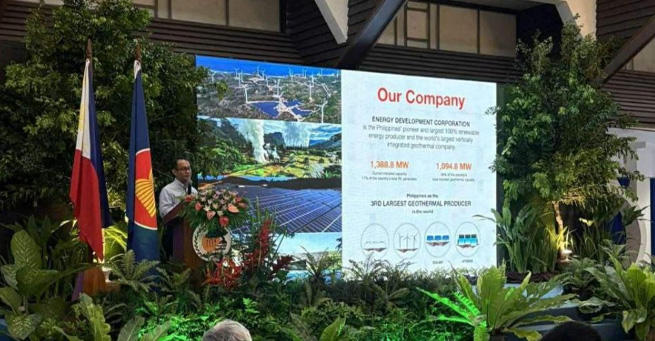
For EDC, caring for these forests is inseparable from producing clean energy. This commitment was shared during the 2nd International Conference and Assembly of the Philippine Forestry Education Network, Inc. (PFEN), held in November of last year in partnership with Visayas State University (VSU) in Baybay City.
At the center of EDC’s presentation was the BINHI Project, a forest restoration program that focuses on rebuilding ecosystems rather than simply planting trees. Speaking at the conference, Atty. Allan V. Barcena, Assistant Vice President and Head of Corporate Support Functions of First Gen–EDC, said the program was designed to bring forests back to a healthy, self-sustaining state.
“BINHI is not just about planting trees,” Barcena said. “It is about restoring forests so they can support life again, plants, animals, water sources, and the communities that depend on them.”
Around the Leyte geothermal site, BINHI supports the growth of native tree species that provide habitat for wildlife such as the Samar hornbill, Philippine tarsier, Philippine brown deer, and other endemic birds unique to Eastern Visayas. These forests also help prevent soil erosion, protect watersheds, and lessen the impact of flooding during heavy rains.
Barcena explained that BINHI follows a regenerative approach, meaning the goal is to help nature recover and grow stronger over time.
“Our vision is to leave ecosystems healthier than how we found them,” he said. “When forests recover, biodiversity returns, and people benefit in the long run.”
The program also relies heavily on community participation. EDC works closely with local governments, schools, environmental groups, and residents living near geothermal areas, encouraging them to take part in protecting and caring for nearby forests.
“Protecting forests cannot be done by one group alone,” Barcena added. “It requires cooperation from everyone—communities, educators, local leaders, and the private sector.”
For forestry students and educators who attended the Baybay conference, BINHI offered a practical example of how lessons learned in classrooms can be applied in real landscapes. It showed that environmental protection and responsible energy development do not have to work against each other.
As climate threats continue to grow, EDC reaffirmed its commitment to continue protecting Leyte’s forests through the BINHI Project—not only for renewable energy production, but for wildlife, water security, and the well-being of future generations.
Through BINHI, the message shared in Baybay was simple: when forests are protected, life—human and wildlife alike—has a better chance to thrive.
(Photo credits: Energy Development Corporation)


 EDC to Triple Leyte Geothermal Capacity by 2030
  First Gen Aims for 9,000-MW Renewable Growth as EDC Marks 50 Years
  Fish Sellers Struggle as Prices Continue to Rise