
 Gina Dean
Posted on November 01, 2026 at 10:29 AM

To many, the misty, emerald ridges towering over Calbayog City are simply a breathtaking backdrop – a distant wilderness reserved for panoramic photos and weekend escapades. But to a mountaineer whose boots have trodden the deepest tracks of Samar’s interior, those mountains are a living, breathing sanctuary. On September 2 and 3, when local mountaineers joined personnel from the Vena Energy Corporation, Samar Province Environment and Natural Resources (DENR) Office and local guides for a multi-day trek across Calbayog’s Mountain spine, the journey began with the pure, exhilarating joy that only high-altitude wilderness can bring.
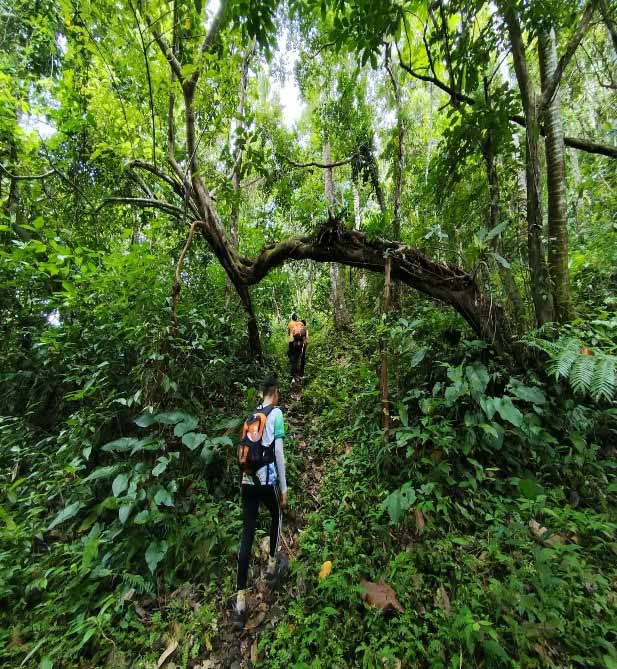
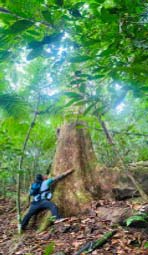
Ascending from Barangay Tinaplacan into the cool embrace of the canopy, there is an undeniable magic in navigating raw terrain. Pushing past overgrown, dense vegetation (“masukal ngan masighot”) and scaling ridges 400 to over 700 meters above sea level, the sheer splendor of the forest unfolds: massive, centuries-old native trees, rocky stream beds lined with giant boulders, and the refreshing roar of waterfalls cascading adjacent to the trail. Reaching the summit of Mount Nakilingan – Calbayog’s highest peak – offered a visually rewarding spectacle, a reminder of the magnificent natural heritage hidden right in our backyard.
Yet, that profound joy was abruptly shadowed by a sobering realization.
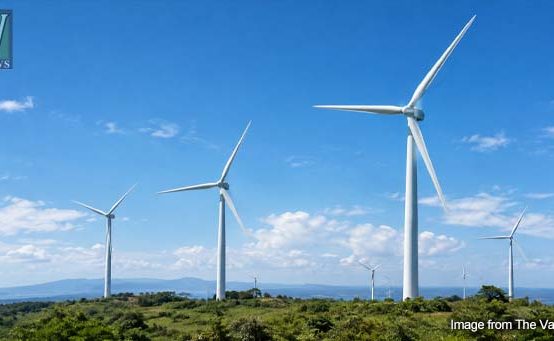
brochures fail to show. Learning that massive industrial wind turbines – each requiring over two hectares of concrete pads, interconnected by heavy-equipment transport roads – are slated for installation on these fragile contours strikes deep concern into the heart of anyone who understands mountain hydrology.
During official site assessments like the August “mock tour,” participants were taken only as far as WT4 – a open, grassy site with little more than scattered coconut palms. But step deeper into the range, past WT14 through WT17, and the forest transitions directly out of secondary growth into primary, old-growth timberland. Along the trail, the expedition team documented freshly cut trees and sliced, abandoned logs. Standing giants were already marked with red paint – a grim inventory designating which ancient trees are marked for destruction to make way for heavy machinery. Even near the virgin summit of Mount Nakilingan, a testing sensor sat quietly in the moss, delivered by helicopter into sensitive high-altitude terrain.
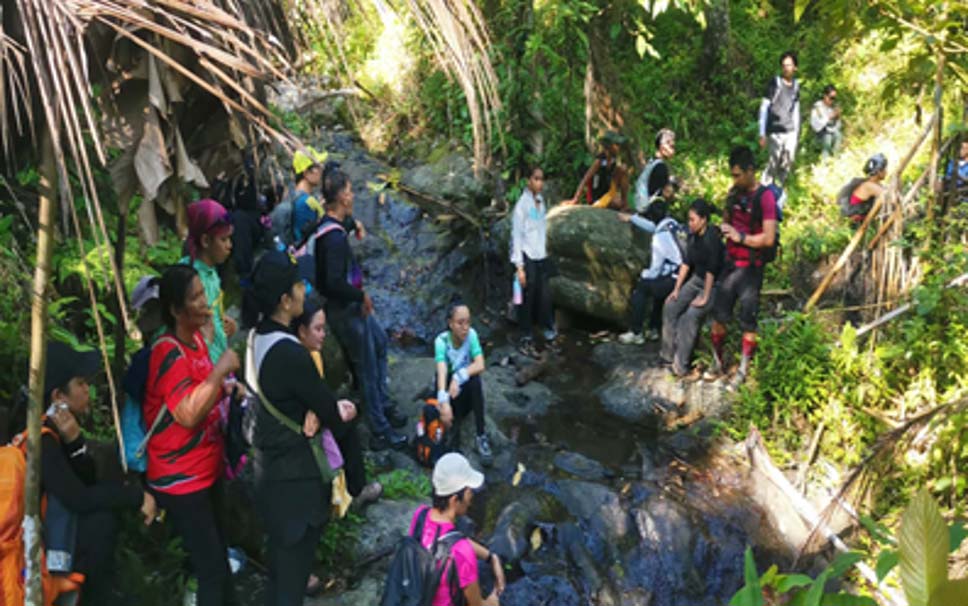
Photo courtesy: Pop Chox Escanilla
The developer’s argument that several proposed turbines sit outside the official boundaries of the Calbayog Pan-as Hayiban Protected Landscape (CPHPL) misses the fundamental law of nature: water flows downhill.
These high-elevation ridges act as the natural sponge and crown of Calbayog’s watershed. Stripping deep root systems, pouring thousands of tons of concrete, and carving access roads through steep, landslide-prone ridges directly threaten the headwaters that feed downstream rivers and communities. Clearing forest cover risks contaminating primary drinking water sources, turning crystal-clear streams into muddy torrents during rains, or causing vital springs to dry up entirely during dry spells. For the communities reliant on these watersheds for daily life and agriculture, the environmental cost is not abstract – it is existential.
Under the E-NIPAS Law of 2018, strict environmental compliance, genuine public consultations, and rigorous protection protocols are mandatory for protected landscapes and their surrounding headwaters. Regulatory enforcement cannot stop at paper permits or convenient boundary lines; it must reflect ground reality
This expedition underscores a pivotal shift needed in how we view our outdoors. Mountaineering can no longer be passive tourism – a simple matter of “picture-picture lang” at a scenic viewpoint. True outdoor stewardship demands active, responsible ethics: enforcing “Leave No Trace” principles, conducting safety and conservation education, and standing up as guardians for delicate ecosystems when industrial footprints threaten to overwhelm them.
Clean energy should never come at the expense of primary ancient forests and clean drinking water. As Calbayog weighs its energy future, decision-makers must listen to the field findings written on the trail itself. We must protect the very mountains that sustain our life below, ensuring that the crown of Calbayog remains green, wild, and untouched for generations to come.


 Banda Rayhak 2026 to Gather Student Marching Bands in Tacloban
 Who Holds the Reins? Calbayog Pushed to the Margins in a 20-Billion Renewable Energy Venture (3/3)
 Leyte Farmers Bring a Forest Back
 Calbayog LGU, SAMELCO I Discuss Rising Power Rates