 Gina Dean
 Posted on July 13, 2026 at 11:21 am

It took nearly seven decades for the government and mining stakeholders to finally look toward the heavily ravaged landscape of the Bagacay Mines in Samar. Seventy years. For the better part of a century, rural communities have lived in the shadow of an environmental ticking time bomb. Local farmers and fisherfolk watched their land turn barren and their rivers run toxic—a slow-moving ecological disaster inherited by generations as an unspoken, unvoted tax on a long-gone mining boom.
Now that the wheels of remediation have finally begun to turn, a haunting question lingers: Is it too late, or can the worst-hit areas of the Taft River Basin still be salvaged?
Anatomy of a Dying Ecosystem
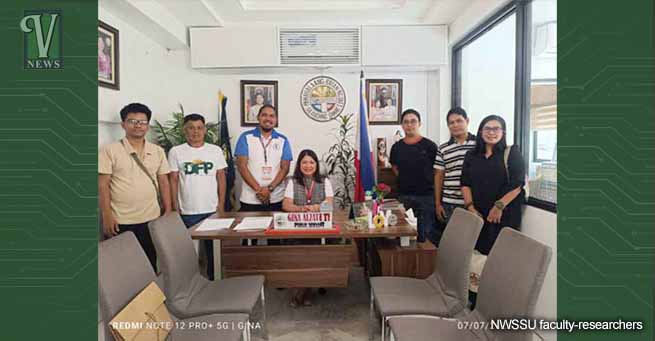
To understand the scale of this agricultural tragedy, we must look at the veins of the land. In 2018, faculty-researchers from Northwest Samar State University (NwSSU), led by Dr. Jessie Sabijon, documented what can only be described as a textbook tragedy of abandoned mining.
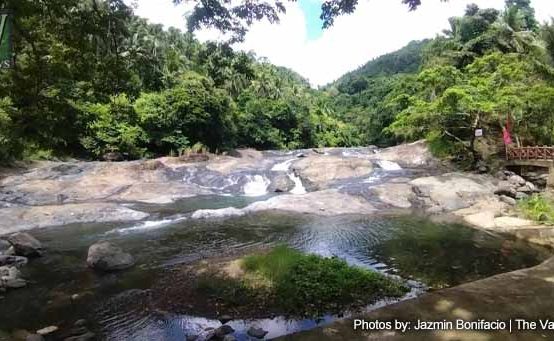
Their assessment of the Taft River floodplain revealed a dying ecosystem: unnaturally discolored water, thick sediment plumes choking out aquatic life, and severe riverbed alterations. This pollution isn’t a historical footprint; it is active, continuous, and unyielding.
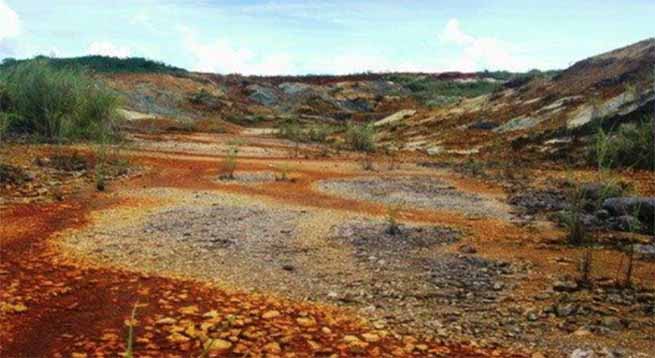
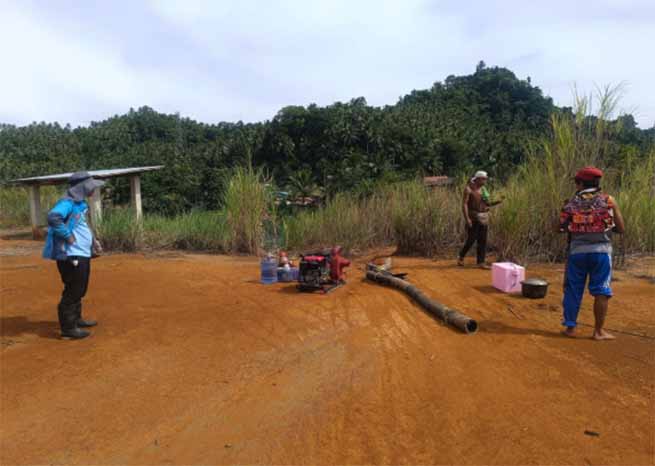
The team’s laboratory analysis confirmed that the floodplain is moderately to highly contaminated with a cocktail of ten potentially toxic elements (PTEs). The contamination follows a cruel geographic gradient. Elevated levels of chromium, arsenic, and nickel pose severe risks to human health. Significant concentrations of copper also saturate the soil. The data revealed an alarmingly high concentration of thallium—a highly toxic heavy metal historically used in rodenticides. Lead and molybdenum do not currently pose an immediate threat, while zinc remains within a safe threshold, serving as an essential micronutrient for local plant life.
Translating Laboratory Science to the “Sako”
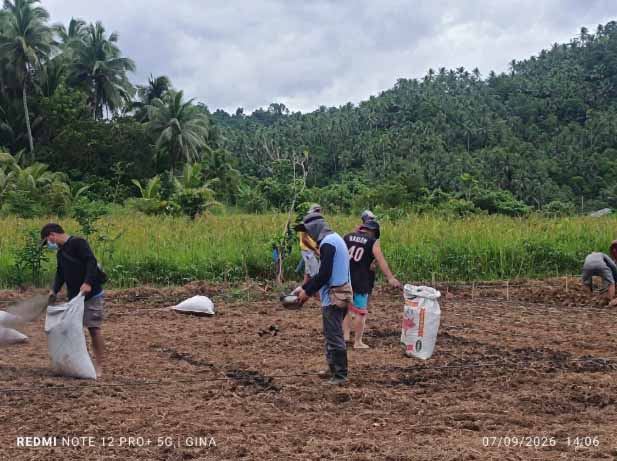
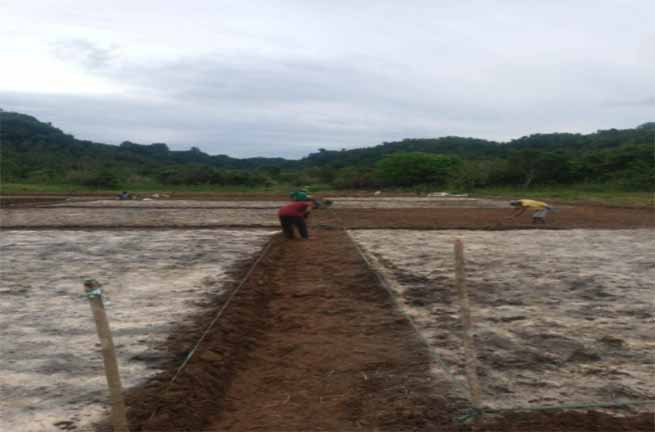
If there is a sliver of hope, it is being cultivated downstream in Barangay Mabuhay. Because it sat furthest from Ground Zero, Mabuhay possessed the lowest levels of heavy metal accumulation, making it the ideal testing ground for NwSSU’s ambitious project on field-verifying bioremediation strategies.
Restoring agricultural lands devastated by mining runoff requires looking far beyond pure laboratory science. As Professor Wendel Ultra, leader of the Phase 2 implementation, points out, treating these contaminated fields demands a complex choreography of biological, physical, and socio-economic strategies. When toxic elements saturate agricultural soil, they bioaccumulate in crops, threatening food security and risking long-term health crises, including cancer, for consumers.
To break this toxic cycle, the team is deploying an integrated four-part strategy that bridges high science with grassroots farming:
Researchers are testing physical soil amendments using both carbonized and uncarbonized (burned) agricultural materials. These materials alter soil chemistry and effectively lock heavy metals in place, preventing them from bleeding further into the ecosystem.
Moving this science from the lab to the field required a vital translation of measurements. While researchers test volume-based application rates at precise 5% and 10% thresholds, they recognize that everyday smallholders do not farm with graduated cylinders.
To make the process deeply practical, Ultra’s team calibrated these volume ratios into a standard local farm measurement: the sako (sack).
Protecting the Food Chain
The ultimate test of this recovery effort lies in how these soil treatments interact with vital food supplies. In alignment with national agricultural priorities set by the Department of Agriculture – Bureau of Agricultural Research (DA-BAR), the team is testing these treatments alongside three local priority crops – rice, sweet potato and sweet corn.
Action Cannot Wait Another Generation
The work being done by NwSSU is monumental, but a handful of researchers cannot carry the weight of a 70-year-old state and corporate failure. Reclaiming Barangay Mabuhay is a crucial proof of concept, but what happens to the families living in Rafael, Binaluan, Malinaw, and at Ground Zero in Bagacay? Are the residents of the worst-hit areas to be permanently abandoned to the toxic legacy of long-expired corporate profits?
Remediation cannot remain a localized academic experiment. It must become a fully funded, aggressive provincial mandate. The government and mining stakeholders must step up from simply “casting a serious eye” to completely bankrolling the restoration of the entire Taft River Basin.
Science has shown us that the land can still be salvaged. Nature is resilient, but time is running out. Samar’s farmers have given seventy years of patience to an industry that left them with poisoned water; they cannot afford to wait another seventy years for justice.


 Calbayog LGU, SAMELCO I Discuss Rising Power Rates
  Catbalogan Walang Gutom Kitchen to Serve 400 Meals Daily Starting October
  Five Calbayognon Women Take Home Crowns in Hadang Festival 2026
  Construction worker shot in Catbalogan
  Police Step Up Patrols After Gunfire in Catbalogan