
 Gina Dean
 Posted on August 13, 2026 at 6:32 am
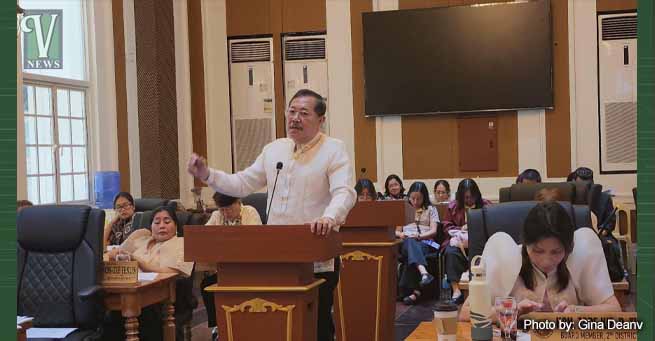
“Sila lang ang nakakaalam because sila lang ang merong database to determine the costs… hindi nila ine-explain sa mga cooperatives. Walang justification, walang explanation regarding how specific monthly figures are reached.”
This scathing assessment from Samar Board Member Beethoven Bermejo Sr. during an exclusive interview with The Vanguard highlights a growing outrage across the province as electricity bills continue to skyrocket.
The Hidden Penalty: Line Loss and Congestion Charges
At the heart of Samar’s regional electricity crisis lies an opaque line-item fee known as Line Loss and Congestion Charges, administered by the Independent Electricity Market Operator of the Philippines (IEMOP) through the Wholesale Electricity Spot Market (WESM). This single charge accounts for a staggering 20 to 25 percent of the overall increase in consumers’ monthly bills, driven by a compound of technical grid constraints and real-time market volatility.
Whenever local power plants experience unexpected outages, replacement energy must be transmitted from distant regions such as Luzon. However, because the aging transmission lines managed by the National Grid Corporation of the Philippines (NGCP) cannot accommodate the heavy load, physical bottlenecks occur and substantial amounts of energy are lost during transit. Under current market mechanics, the cost of these technical line losses—alongside second-by-second spot price spikes during peak evening hours—is shifted directly onto captive consumers. In effect, Samar residents are left paying steep financial penalties for power grid failures completely outside their control.
A Moral Injustice Wrapped in Opacity
What transforms this operational failure into a profound moral injustice is the complete lack of transparency. Electric cooperatives are left operating in the dark because only the market operator holds the proprietary software and databases needed to determine congestion fees and market nominations.
Despite the immense financial strain on local families, no detailed technical justifications or itemized breakdowns are provided to distribution co-ops. Under the framework established by the Electric Power Industry Reform Act (EPIRA), rural communities with zero competitive energy alternatives are left completely unprotected from aggressive spot-market pricing.
In response, SAMELCO 1 and 2 launched a unified protest against these excessive rates. Their stand earned the full support of the Provincial Board of Samar through a formal resolution—spearheaded by Board Member Bermejo—officially condemning IEMOP’s pricing methodology.
Mobilizing for Accountability and Long-Term Relief
To protect struggling households, local leaders and cooperative officials are mobilizing across multiple fronts. On the regulatory level, the Sangguniang Panlalawigan of Samar, led by Board Member Bermejo, has formally petitioned the Department of Energy, the Energy Regulatory Commission, and the Office of the President to investigate WESM’s operational mechanics. Simultaneously, officials are working alongside regional cooperative federations to secure immediate relief for consumers by negotiating staggered payment plans, fighting for temporary billing freezes, and lobbying Congress for long-overdue legislative amendments to EPIRA. Looking toward a permanent solution, provincial leaders are advocating for local renewable energy projects under 10 megawatts. By generating solar, hydro, or biomass power locally and feeding it directly into the distribution grid, Samar can bypass high-voltage transmission bottlenecks, break free from volatile spot-market charges, and ultimately secure fair, reliable electricity for its communities.
While President Marcos has announced broad national initiatives to lower power costs, Board Member Bermejo emphasized that executive action will fall short unless the administration addresses the root cause: the unmitigated financial burden that market operators and grid failures place on captive utility consumers. Until this “black box” is opened and reformed, Samar’s families will continue to pay for a broken system they did not create.
Photo by: Gina Dean


 Calbayog LGU, SAMELCO I Discuss Rising Power Rates
  Catbalogan Walang Gutom Kitchen to Serve 400 Meals Daily Starting October
  Five Calbayognon Women Take Home Crowns in Hadang Festival 2026
  Construction worker shot in Catbalogan
  Police Step Up Patrols After Gunfire in Catbalogan